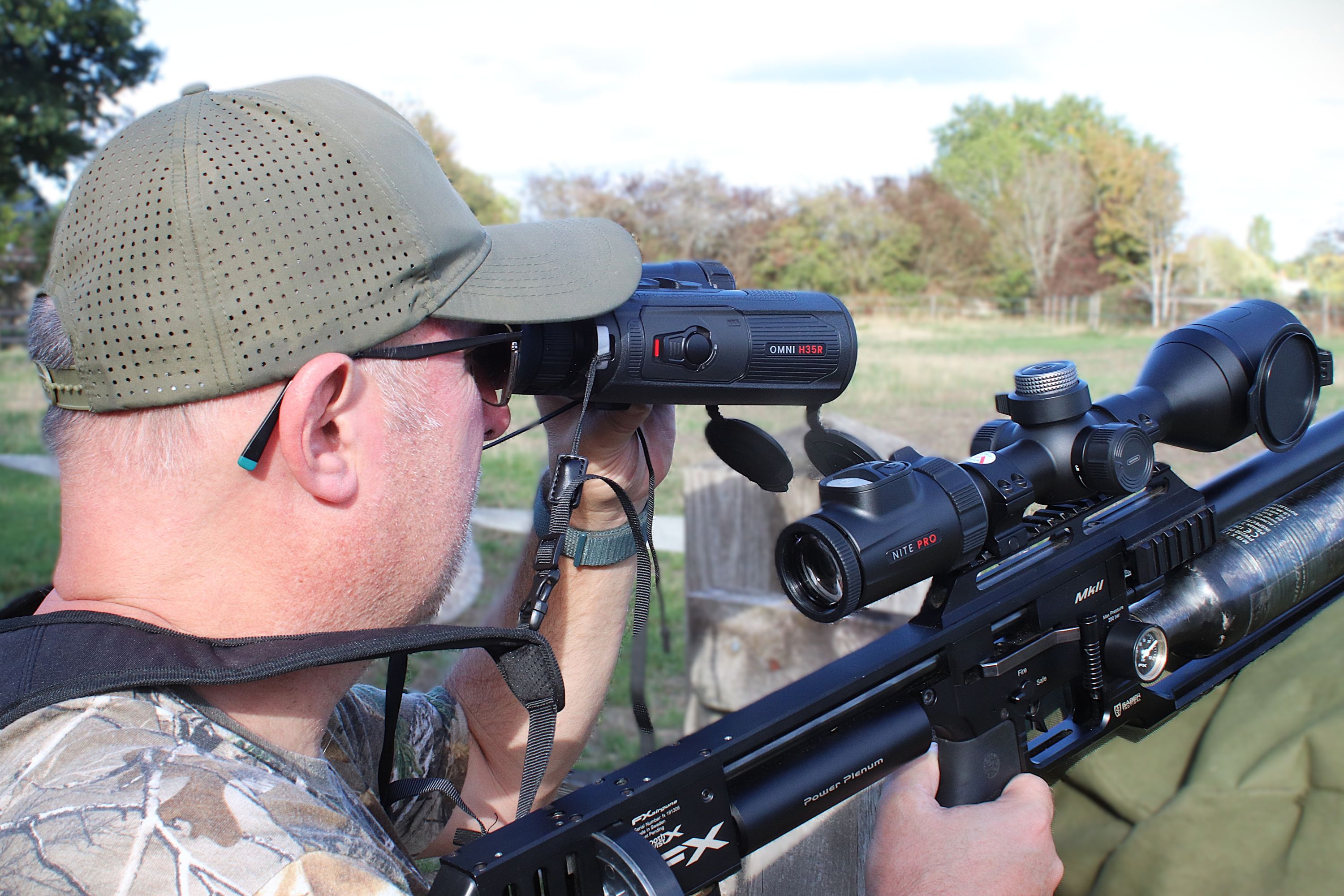
The digital hunting optic sector has developed faster than any other over recent years and it seems like barely a month goes by without a new product being launched. Quite simply, the companies that make them are engaged in an arms race, which means ever-improving performance and value for shooters.
At a launch event in Staffordshire, UK at the end of September, Nocpix announced two new products that look set to raise the stakes considerably. Its new Nite Pro D50R digital scope and a couple of Omni multispectral binoculars are the first in the world to deliver shooters 8K picture quality.
With four times the pixel count, the new Nocpix products surpass the 4K specification we had come to consider as best in class. This is, of course, good news for consumers as other manufacturer will no doubt be working out how to respond.
For now, there’s no doubt Nocpix has raised the bar to a height it intends to maintain as its promise that ‘the 8K era has begun’ suggests more products are in the pipeline.
Having had a chance to use both the Nite Pro D50R scope and the Omni H35R multi-spectrum binoculars, I’ve come to appreciate qualities that extend beyond the 8K image quality.
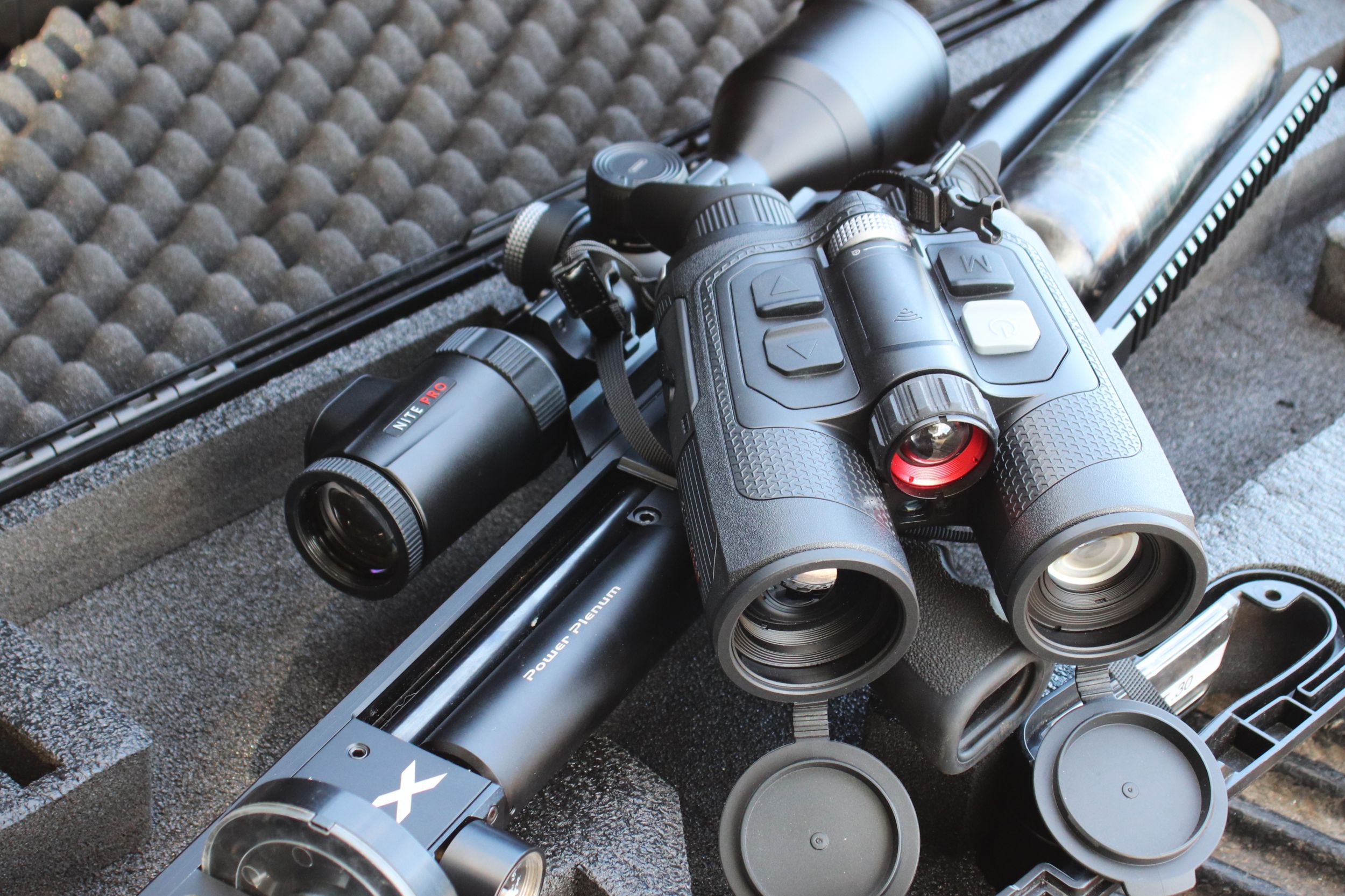
Below: The Nocpix NitePro and Omni boast 8K viewing and much, much more

Powered by an 8000 x 6000 sensor coupled with an F1.25 large aperture lens and Nocpix’s Light+ algorithm, image quality is, of course, the key feature on the Nite Pro and it’s hard to describe just how clear the picture is. Even the videos you may have seen on YouTube don’t do it justice as recorded footage is compressed and not as clear as real time viewing.
For years, reviewers have qualified the undoubted advances digital scopes have made in terms of optical quality by pointing out that glass scopes still have the edge.
Now though, with the possible exception of top-of-the-range ultra-expensive glass, the picture through the Nite Pro, thanks to its 48 megapixels, is as good as the traditional scopes I use, if not better.
Impressive as the image quality is in daylight, the clarity is sustained in murky twilight thanks to that large aperture lens which soaks up any available light. And in full dark, with an IR torch attached, the image still retains incredible levels of sharpness and detail.
Below: The Nocpix NitePro maintains remarkable image quality and brightness, even in the fading light


Thanks to all those pixels jammed together, pixelation even at the higher end of the 3-36x magnification range is minimal at ranges beyond those most airgunners, and a good few rimfire and centrefire shooters, need to concern themselves with.
But the Nitepro is more than a super-size sensor. As you’d expect, its packed full of the usual features we’ve come to expect on a quality digital optic – all controlled by a button on the top turret and a grey control ring that surrounds it.
These include, and are by no means limited to, a 1,200m laser range finder to tell you how far away that rabbit is, and a ballistic calculator to work out the hold off needed for the shot. Be aware though that locating the laser range finder unit above the 50mm objective lens results in a 70mm housing, so you’ll need to use mounts high enough to clear the barrel.
There are eight profiles for you to save multiple zero settings and ammunition types to. You also get a choice of seven reticle designs with nine colour options. And if that’s not enough, the free Nocpix app allows you to design your own reticle.
Further choices exist for the style and colour of the laser range finder and ballistic calculator indicators, as well as the hold off marker.
Yet more options mean you can fine tune the laser range finder function, including the length of time you want the splash to flash and the hold off information displayed on the 1.03-inch 2560x2560 AMOLED display screen.
There are many more features and functions to work through, and if it all sounds complicated then worry not as it really isn’t. If you’ve spent any time with a digital scope, you’ll soon find yourself flying through the menus and options.
So, Nocpix has nailed the image quality and all the other clever digital stuff. But the Nitepro offers much more. Some of the features are so subtle that it’s only having used the scope for a few weeks that I’ve come to appreciate them.
The controls for example not only ooze engineering quality and are easy to use but are clearly the product of a lot of time spent talking to shooters to understand what they want.
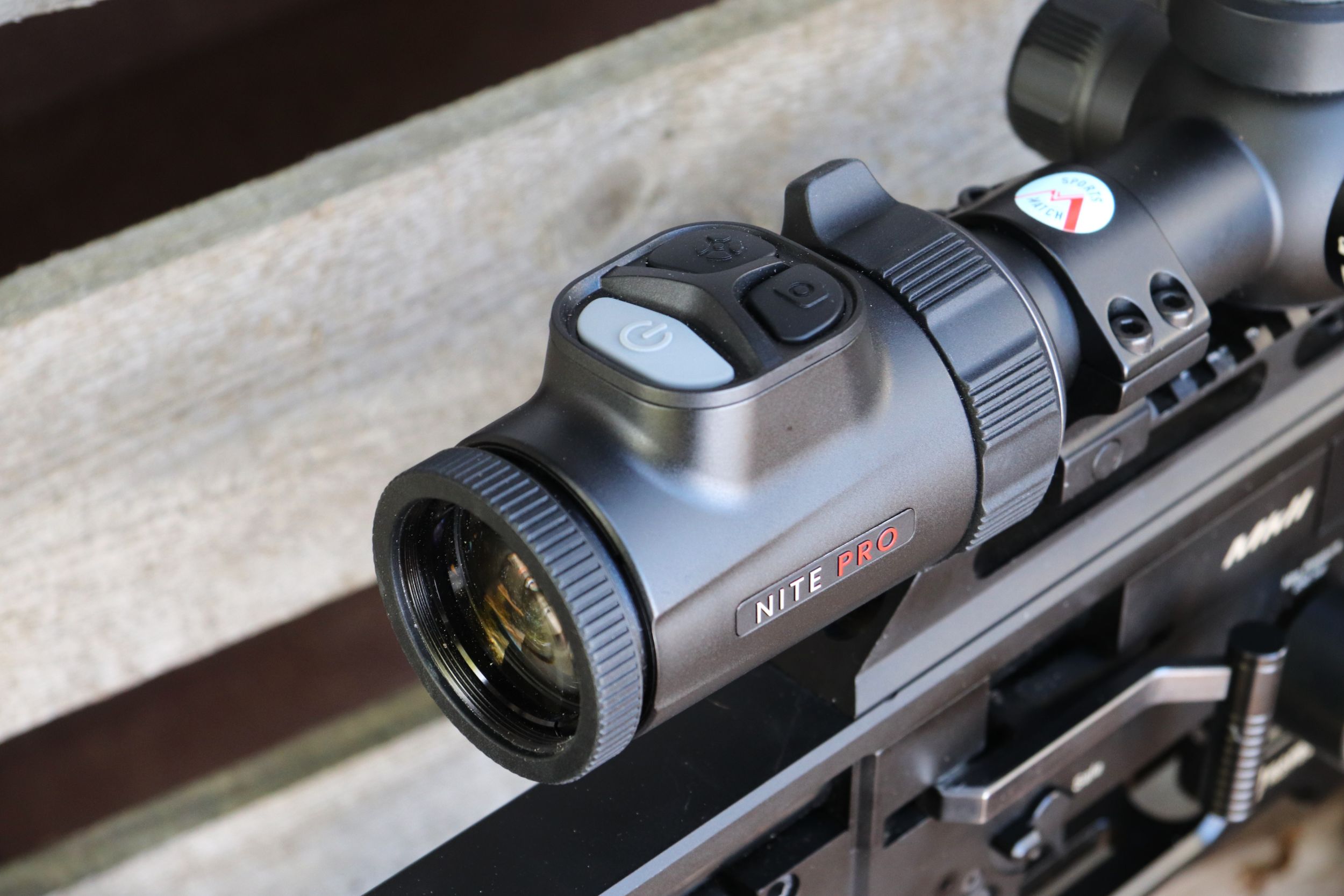
The three buttons on the eye bell control the functions you will need most often, such as range finding and recording. Zooming through the 3-36x range is achieved by rotating a rubberised and grooved collar that has an integrated throw lever and is located where we’re used to finding the magnification control on a scope.
Located on the top turret, the focus ring has another throw lever and not only falls naturally to hand but operates smoothly, if a little sensitively. The turrets left and right do nothing other than power the Nitepro. The one on the right rotates to reveal a USBC port which charges an integral 3850 mAh battery via a provided cable that is also used to download any footage recorded onto the 64GB memory.
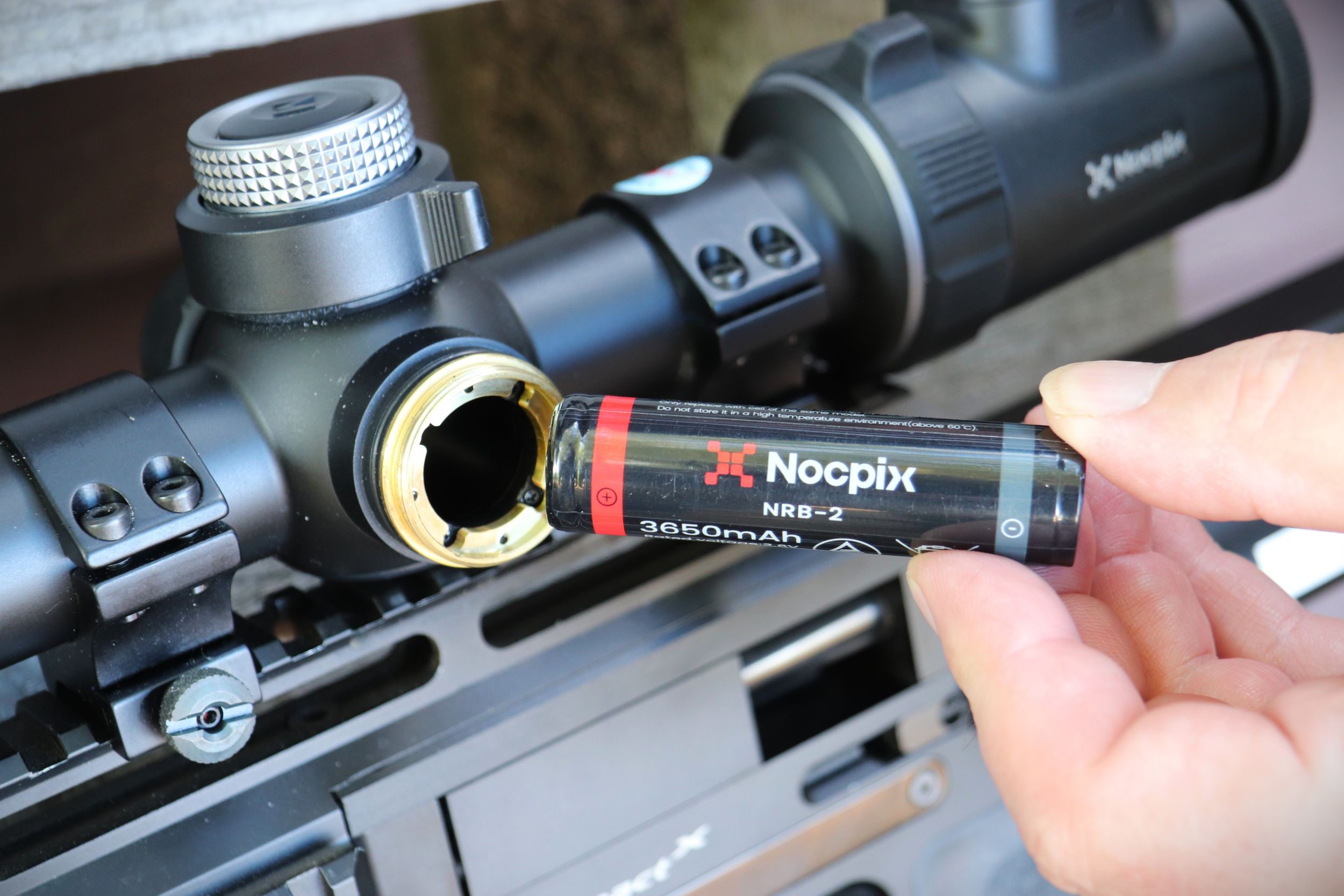
The left-hand turret unscrews to reveal a cavity into which an 18650 rechargeable battery (two are provided along with a charger) is inserted. Even this humble function has been improved as it doesn’t matter which way round you insert the battery – positive or negative terminal first. If you’ve ever had to swap out a battery in the dark, you’ll appreciate just how useful this is. Nocpix says you can expect a combined run time of around six hours.
Below top: The main controls on the Nocpix NitePro are accessed via a push-button panel
Below bottom: Being able to inset batteries either way round is a massive advantage when hunting in the dark
A long-held pet peeve with digital scopes is the fact that most of the time the laser splash doesn’t align with the laser indicator. It’s not an issue in the dark, when the splash is visible, but in daylight, you have to trust to luck that the indicator and flash are synced to give you an accurate shot.
Some digital scopes have attempted to address this by allowing you to adjust the position of the laser range finder indicator on the screen so it aligns with the splash. And that’s fine until you change the magnification setting.
The Nocpix Nite Pro allows you to change the position of the indicator too, using an x and y adjustment. In addition, by unscrewing a panel on top of the objective lens – you’ll need a very small screwdriver – and using a tool that comes with the scope, you can tweak the position of the splash as well.
It’s an operation best carried out in the dark when you can see the laser splash and means you can align the splash, the range finder indicator and the centre of the reticle. Not only does it mean you will get an accurate distance and ballistic calculator reading each time, it also makes lining up a shot much quicker than you’d think was possible.
I’ve used the Nitepro on several hunting trips and it’s my new favourite digital scope. That’s not to say 4K scopes are inadequate. They’re not, very far from it. But there’s no denying that despite how well suited they are to airgun hunting, the 8K picture on the Nite Pro is just better.
And that’s all lovely of course. But no matter how good your scope and rifle are, finding something to shoot at in the first place is more important. That’s where Nocpix’s new Omni multispectral binoculars come in…
Below: Nocpix Omni multi-spectrum binoculars deliver 8K daytime and night vision viewing and pin-sharp thermal spotting
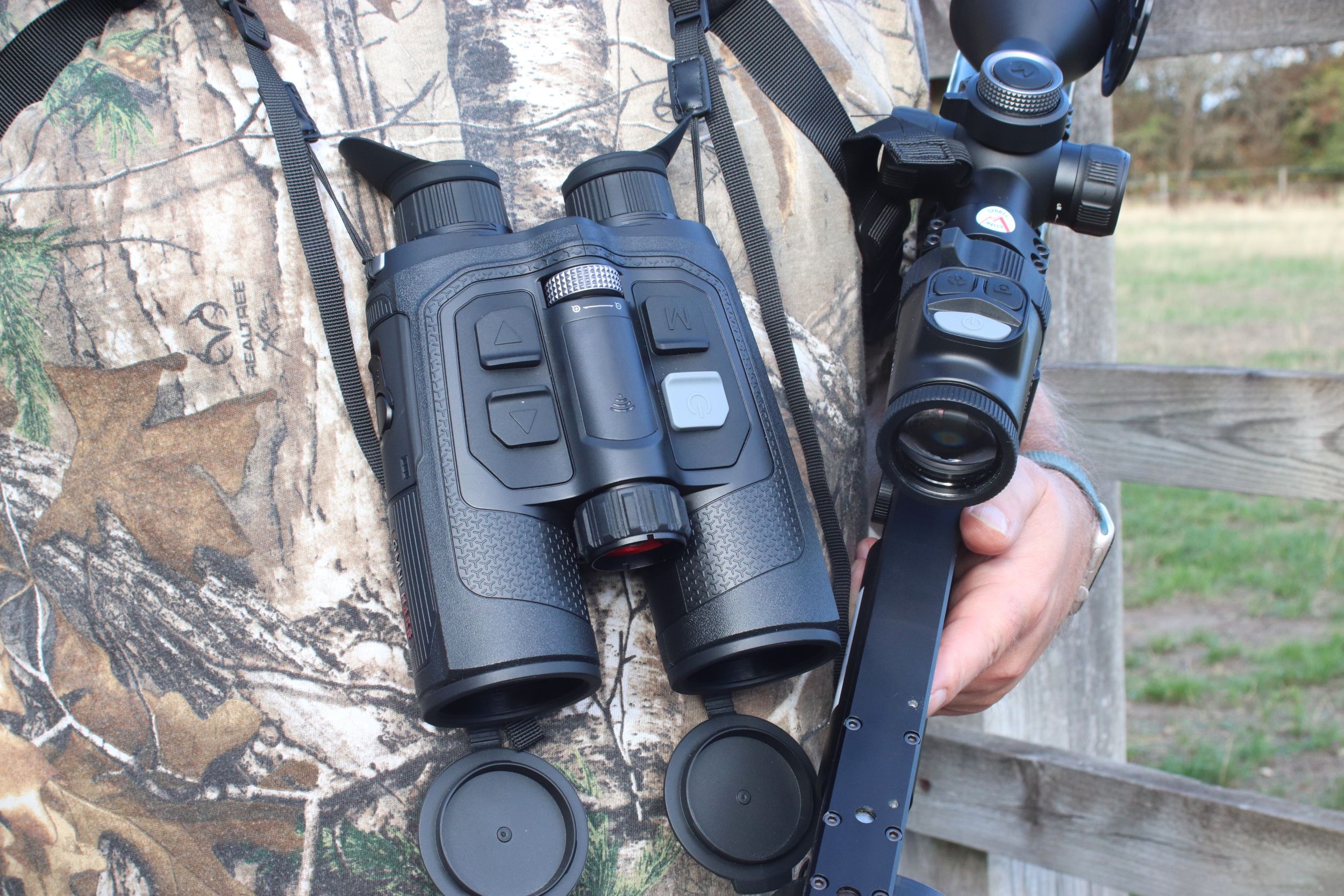
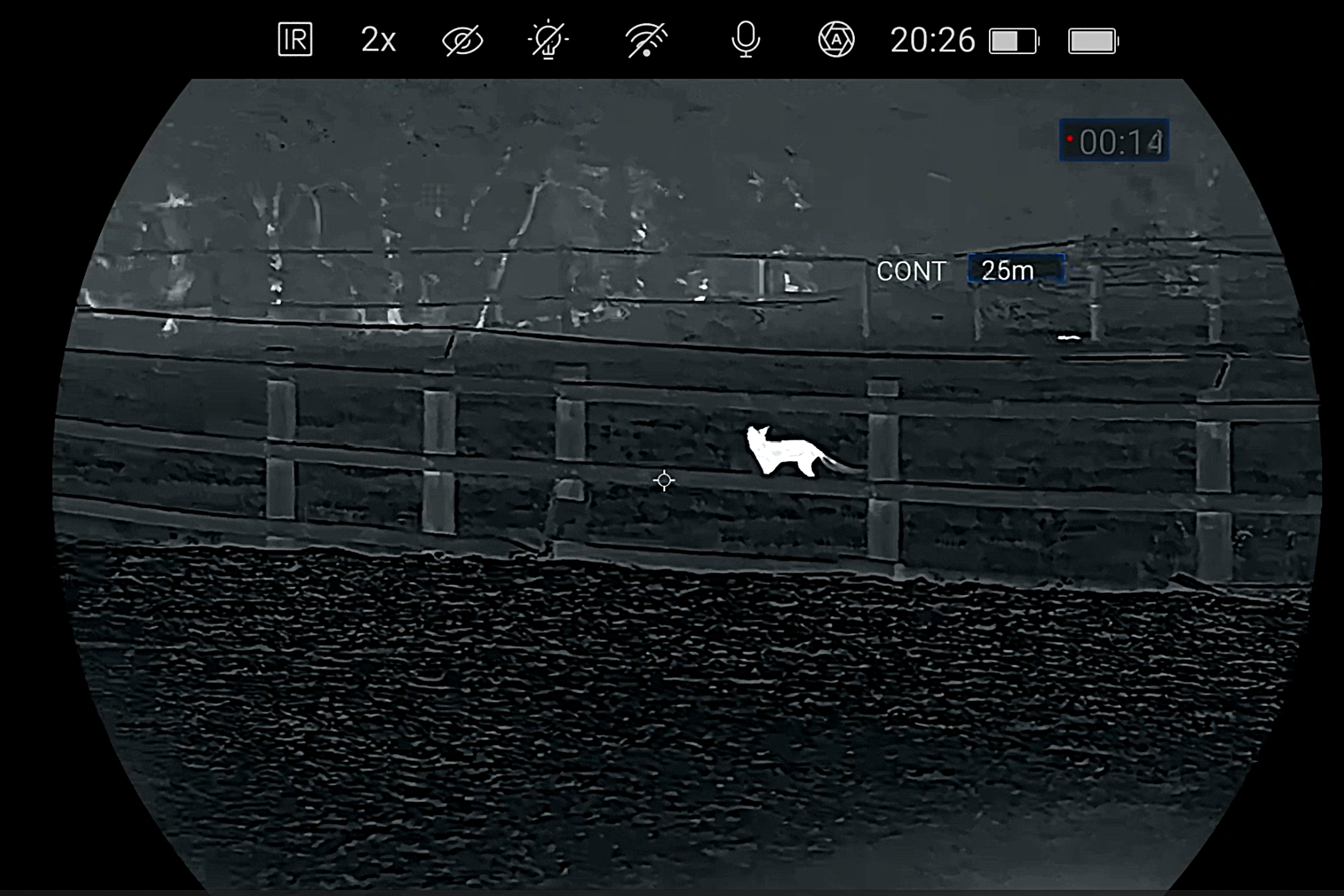
Just to be clear, there are other multispectral binoculars offering daytime colour, nighttime infrared and thermal modes. But the Nocpix Omni models are the first to make use of 8K technology.
Currently, there are two models – the H35R and L19R, which is priced at £1,499. Both boast an 8192 x 6144 sensor for the daytime and IR modes and a 50Hz frame rate.
The L19R features a 384 x 288 thermal sensor and 19mm objective lens. The H35R model carries a premium due to its bigger spec 640x512 thermal sensor and 35mm F1.8 aperture daytime colour/IR lens. Both models also have a 1600 x 1200 AMOLED display and a NETD rating of 15mK, which is a means of measuring a sensor’s ability to detect temperature variances in millikelvins. Generally speaking, the lower the NETD rating, the more sensitive the sensor is to temperature and therefore the sharper the image.
Although I used the Omni H35R in its thermal mode most of the time, having more than one viewing option is an undeniable benefit.
In 8K daytime colour mode, the image through the Omni binoculars is as impressive as it is through the Nitepro scope, offering a detection range of up to 1,800m with little pixelation even at distance and high magnification.
And the IR mode, with three levels of brightness from the centrally mounted IR torch and the option of 850nm and 940nm (850nm only on the L19R), too has its benefits at night, especially when it comes to picking out eye shine.
Activating the IR mode requires that you put the Omni into ‘Moon’ setting and then click on a lightbulb icon to turn the IR illuminator on. Swapping between thermal and daytime colour/IR modes is achieved by a short press on the top right button.
It’s not just 8K technology the Omni shares with its Nitepro sibling, the menus are similar too. There are just four buttons on the binoculars. The top left is the power button and the one below access the sub menus which are navigated by two up and down arrows on the right.
A short press on the menu button accesses a truncated list of the functions you are likely to need most often, including screen brightness, colour saturation in day mode and exposure. It also enables you to swap between day, dusk, moon, yellow and green modes and activate the flood adjustable IR illuminator.
Regardless of which of the three viewing modes you choose, a longer press on the menu button provides a more detailed selection of functions such as wifi, picture-in picture, a ballistic calculator function and the ability to tailor the laser range finder.
In thermal mode, you also get the choice of six colour palettes as well as the option of a monochrome ‘cool’ view of the nighttime world or a more sepia tinted ‘warm’ alternative.
Aside from all the electronic wizardry, the Omni binoculars also boast a range of thoughtful design features designed to make them easy to use in the field and in the dark.
The two eyepieces can be moved further apart or closer together to suit the set of your eyes, and wings on the rubber eye cups do a good job of blocking out light intrusion. Focusing the two lenses – F1.8 on the left for daytime colour and IR, and F0.9 on the right for thermal – is controlled by thumb wheels on the underside as well as ocular adjustments on the eyepieces themselves.
Another thumb wheel on top takes care of zoom. In daytime colour/IR mode, the magnification range is 3-18x. To maximise image clarity and field of view, the range in thermal mode is 2-16x. In all modes, magnification operates in 0.5x increments.
The Omni H35R is powered by an internal battery that is charged by inserting a provided USBC cable into as port on the underside, as well as a pair of re-chargeable 18650 batteries which, like the Nite Pro, can be inserted either way round to give a claimed combined run time of 7.5 hours.
Below: The Nocpix Omni's simple controls and stunning image quality are backed up by an impressive battery runtime
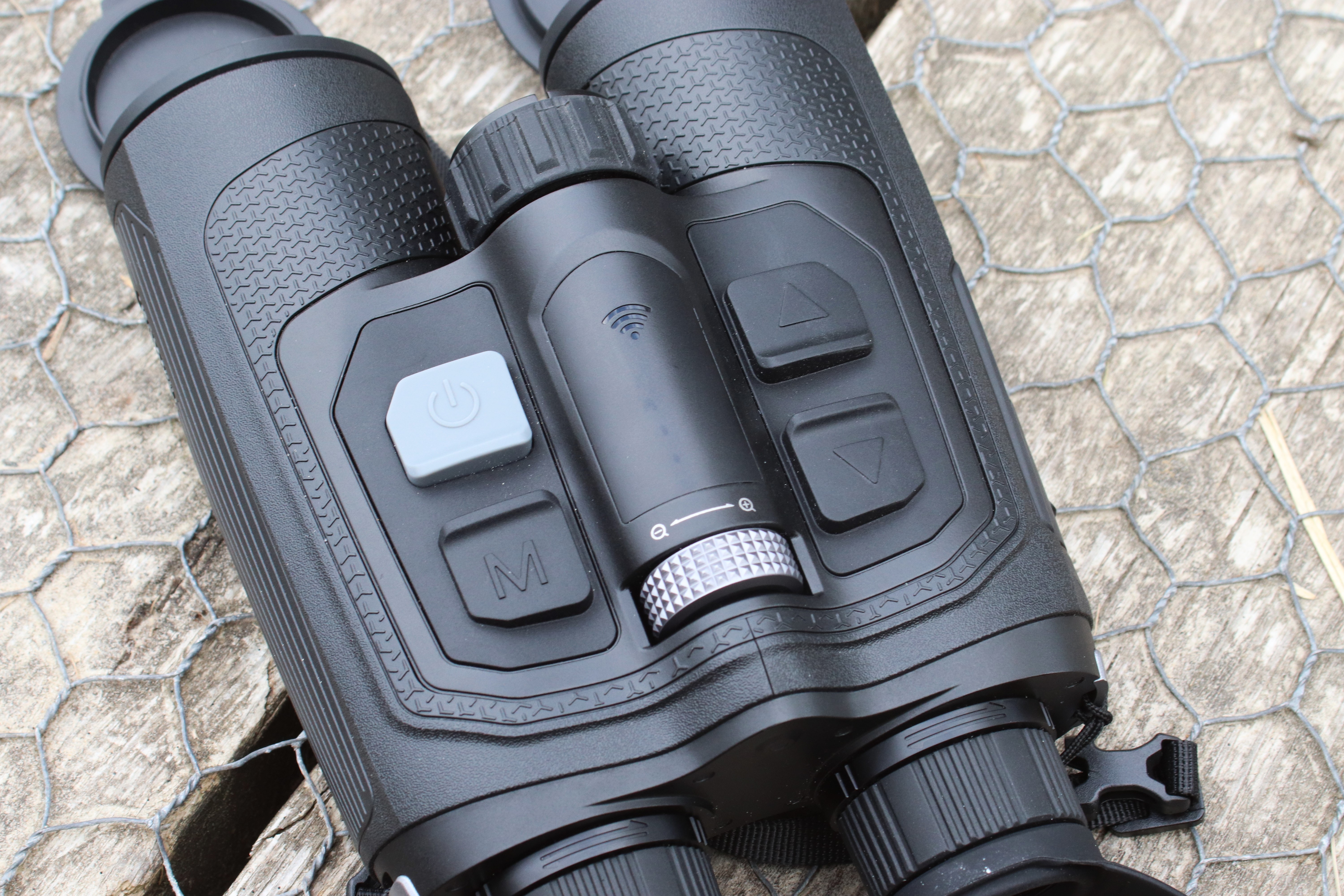
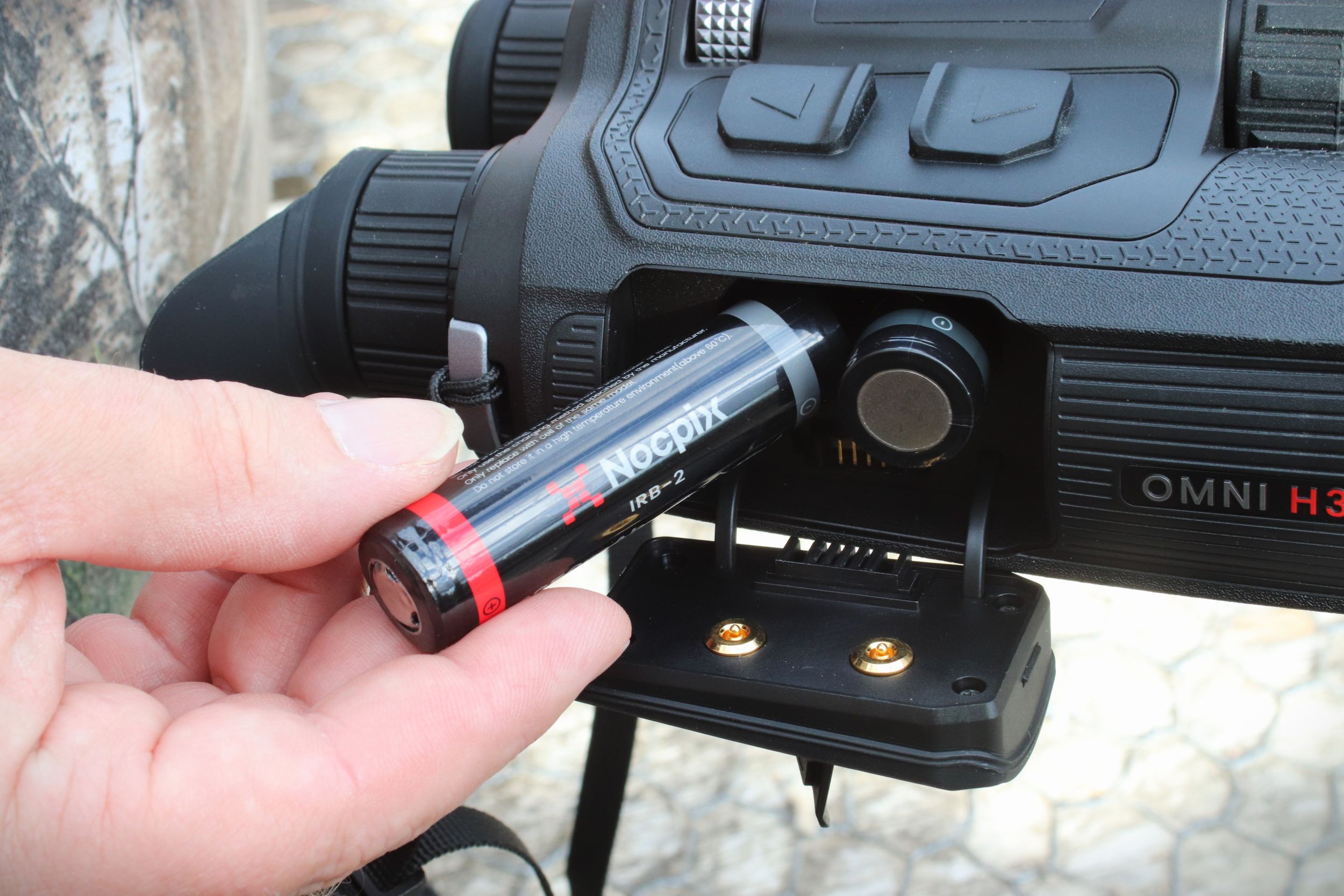
In addition to navigating the sub-menus, the bottom button on the right records photos and video onto a 64GB internal memory which is downloaded by inserting a provided cable into a USBC port on the underside that will also charge the internal battery.
A long press on the top right button activates the 1,000m laser range finder and ballistic calculator which is easy enough to set up, requiring all the usual information such as the velocity and ballistic coefficient of your ammunition, weight of pellet and height between the centre of your rifle’s barrel and scope.
With that taken care off, activating the laser range finder reads the distance and provides the information you’ll need in MOA, mils, cm or inches to apply to your shot. Now that’s clever enough, and if you don’t have a scope with a ballistic calculator, the Omni will provide the information you need to apply to your shot.
However, if you have invested in the company’s 8K Nite pro digital scope as well, activating the N-link feature on both products enables them to communicate with each other so that ballistic hold off information provided by the binoculars will imprint on the scope.
Ten years ago, my night shooting involved a now defunct clip-on IR rig with a screen which demanded a very unnatural head-up shooting position. Setting it up meant pushing a rubber tube onto the back of my glass scope and then jamming a camera into the end of it. A clip snapped around the scope and onto that I had to screw on a combined IR beamer and screen.
Cables and wires linked them all together along with a battery pack that attached to the stock with velcro straps. And once all that was accomplished, I had to wiggle the whole contraption around to centralise the image on the screen. Oh, and you also had to shoot with the butt of your rifle in the middle of your chest. It wasn’t cheap either, costing around £700 even back then.
But look what we can use today for around the same price. Ballistic calculators, laser range finders, scopes that talk to your thermal spotter…
Some will ask if all the technology is a step too far, that it makes shooting too easy. But I wonder how many of them still use open iron sites rather than a telescopic optic? The purchase of a digital day/night scope and thermal spotter is not compulsory. Each to their own and if you’d rather pursue rats and rabbits with a lamp then good for you.
Personally, as someone who sets out to shoot live quarry, I welcome any technological assistance as it makes me a better shot and that means the chance of me wounding some poor creature is greatly reduced.
And ultimately, that’s what Nocpix has given us with the Nite Pro D50R and Omni H35R/L19R – the opportunity to be a better shot.
It’s up to you whether you embrace this next evolution in shooting optics. Me? I can’t wait to see what’s next.
Article first published October 7th 2026