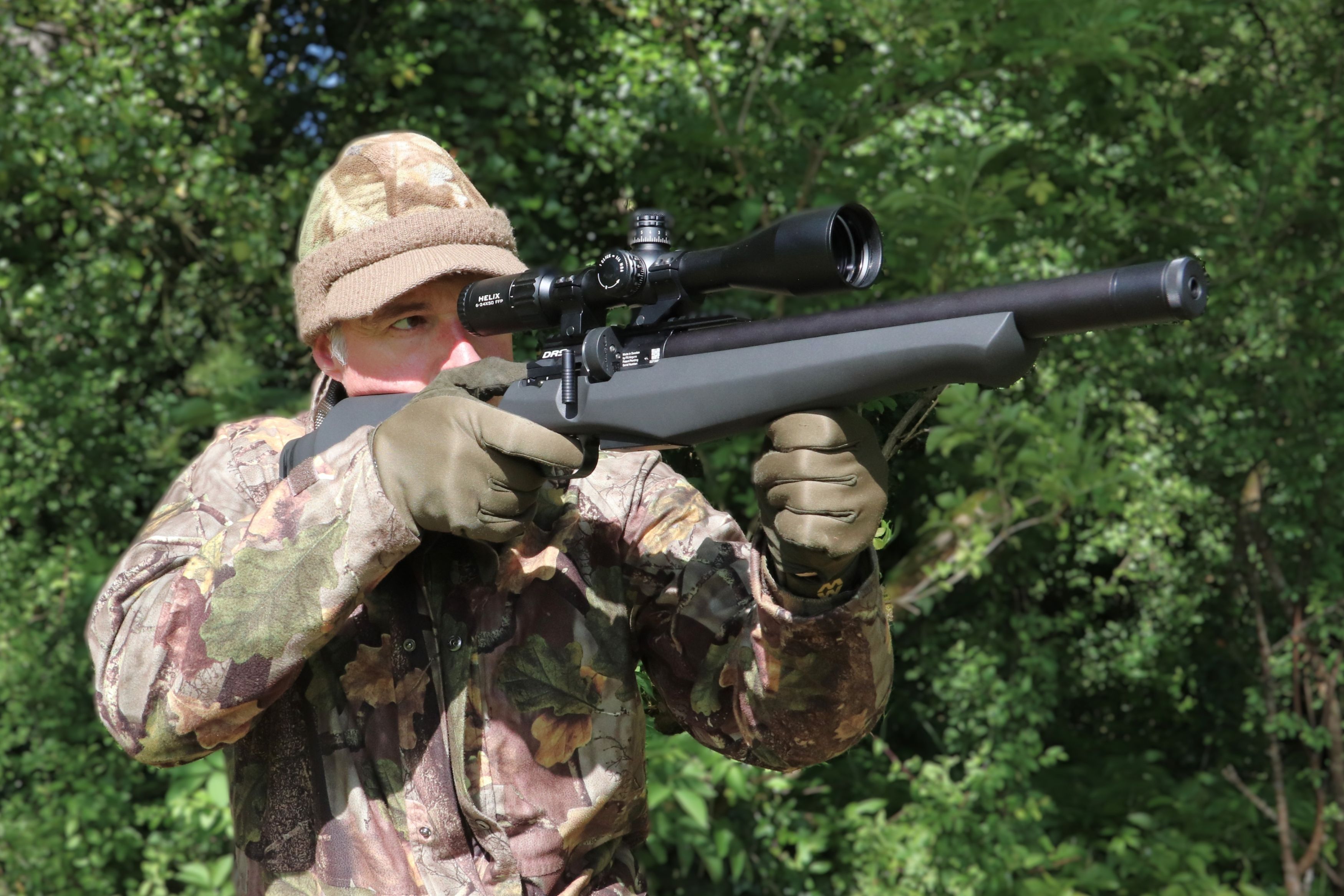
I don’t mind saying that I was very excited about getting my hands on the FX DRS MKII. After shooting the original model for a couple of years, I was eager to see how the updated version compared. I must confess that I was also a little apprehensive, because I didn’t want to see too many changes to an airgun I thought was already very good indeed.
FX sent me the Classic version of the DRS MKII with the synthetic stock in the short-barrelled Compact guise. This model has a recommended retail price £789.99, which immediately confirms that the DRS is still surprisingly affordable given its overall build quality and performance.
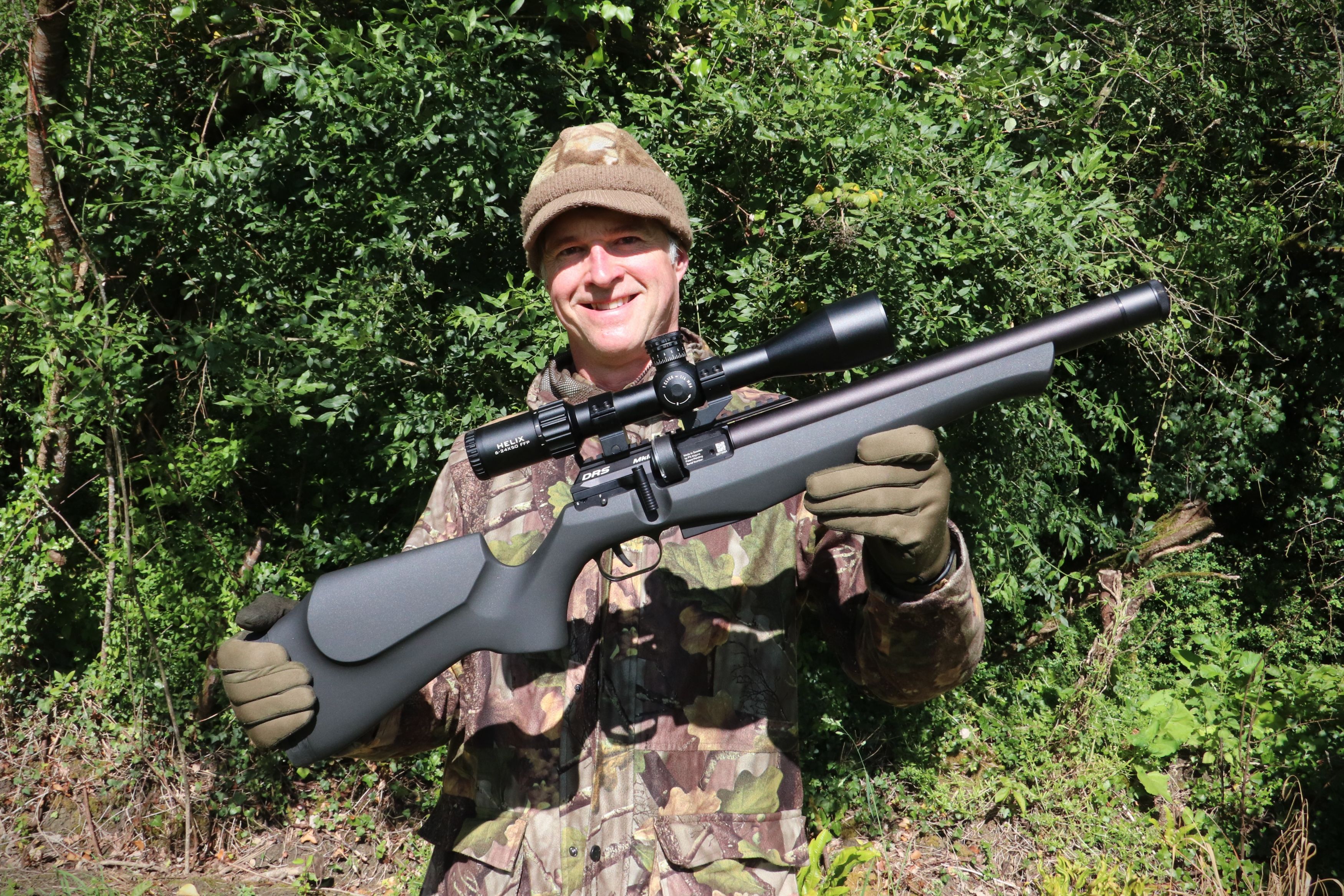
On unboxing the review gun, I immediately took to its very compact proportions and was pleased to see that it still looked very familiar. It actually measures up at a diminutive 840mm from muzzle to butt, and weighed in at 2.2kg (unscoped) on my scales. Lightweight and nicely balanced, this gun would be no great burden to carry on longer roving forays.
The Classic version of the DRS MKII is still styled along the lines of a traditional sporter, albeit with a modern twist. Stock options include synthetic (featured here), and the Redline laminate, which looks absolutely stunning.
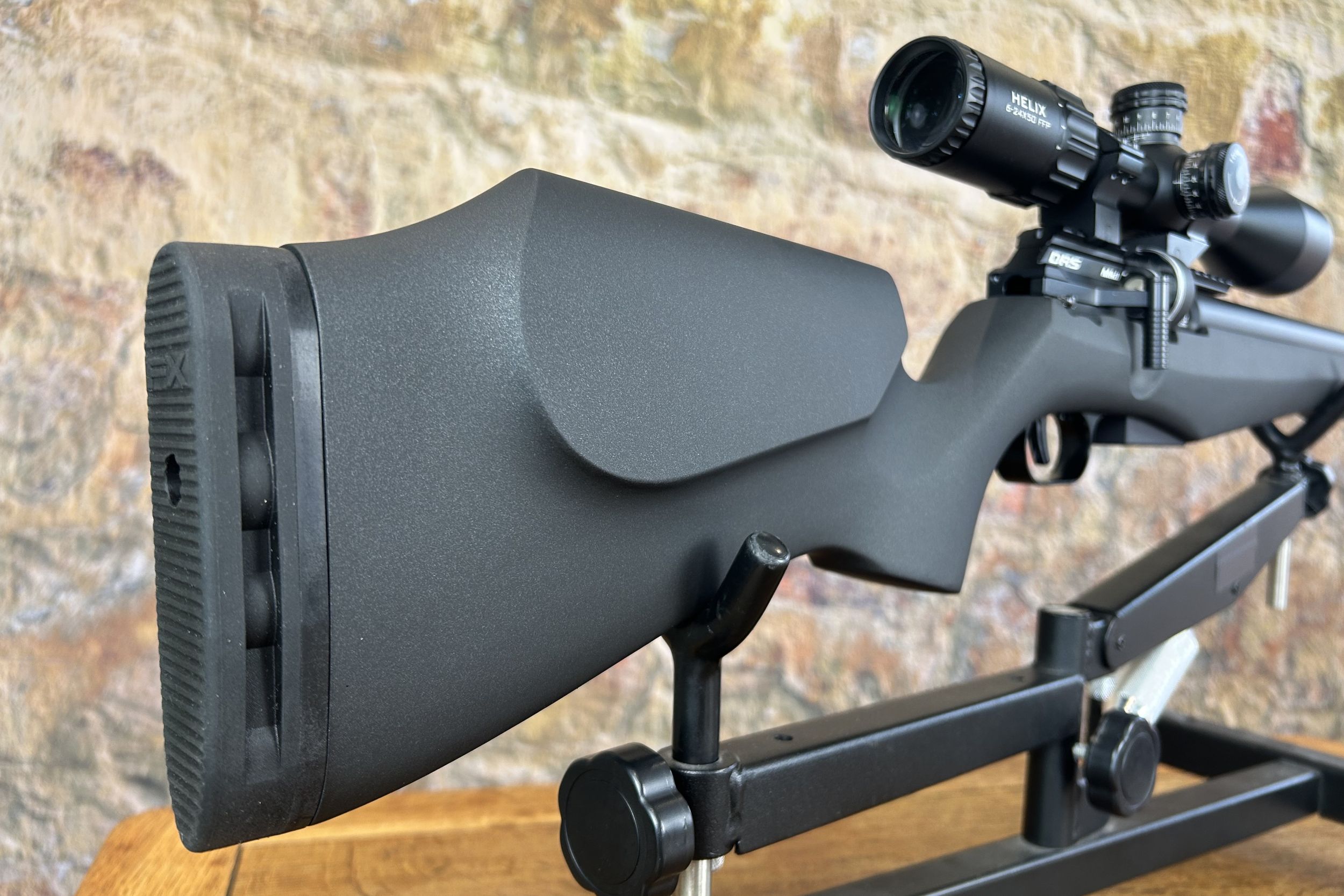
To my eye, the ambidextrous synthetic stock looks to be the same as the one on the original DRS. It’s a tough workhorse of a handle which should stand up very well to the rough and tumble of pest control shooting.
Most importantly, the stock appears to have been designed for function and form, and I particularly like the profile of the forend. There is no stippling, but the surface finish is still very grippy. Moving back, the pistol grip has a nice deep scallop to swallow up the base of your thumb and is comfortable to shoot thumb-up or thumb-around.
The cheek-piece is very clearly defined, and is sufficiently high to deliver good eye-scope alignment. The butt is finished with a soft rubber pad which, although quite basic, is nice and squashy and really grips into your shoulder when the gun is mounted.
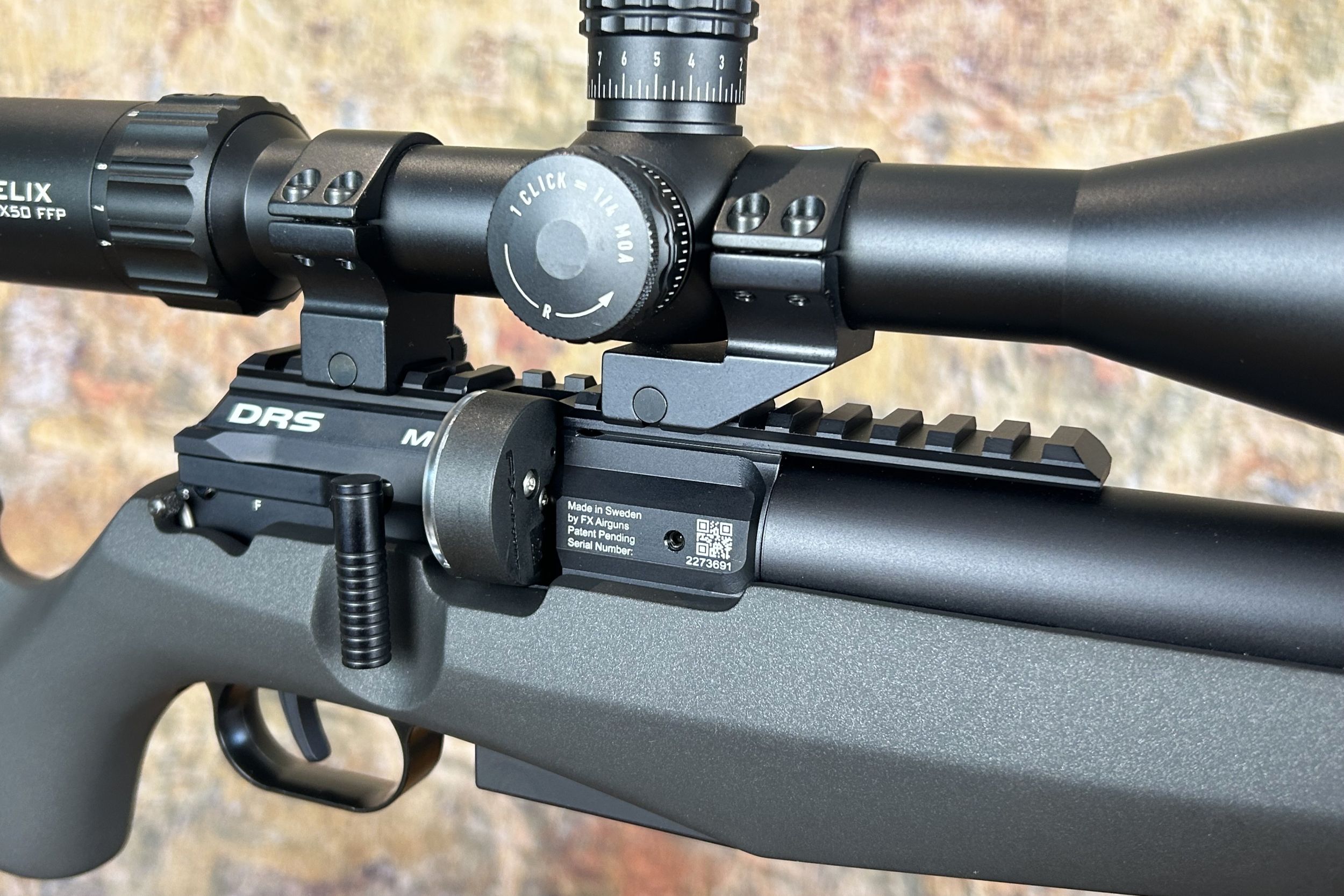
Below top: The Compact version of the DRS MK2 Classic is a short and light air rifle - picture here with the Element Optics Helix scope
Below bottom: The ambidextrous synthetic stock is robust and designed for comfort and practicality
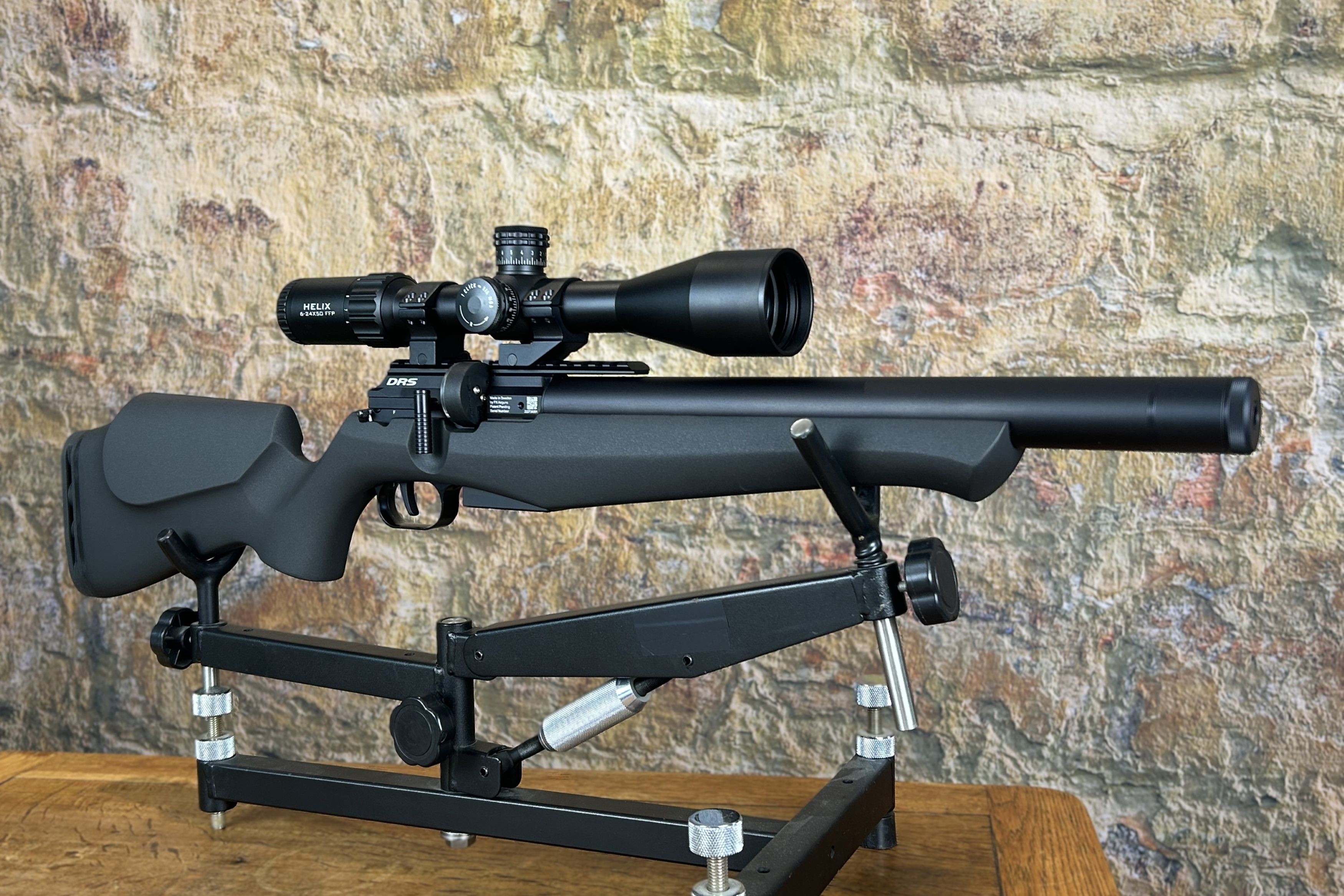
As with all offerings from the world-leading Swedish gunmaker, this is a very tidy-looking airgun – the finish of the metalwork looks immaculate and, if my MkI is anything to go buy, it should stand up well to heavy use. When it comes to scope mounting, the DRS MKII is equipped with a Picatinny scope rail, which I think most people will really appreciate. It is 30 MOA to assist with long-range work, and offers around 180mm of camping space, which is a fair bit more than the dovetail rail on the MkI.
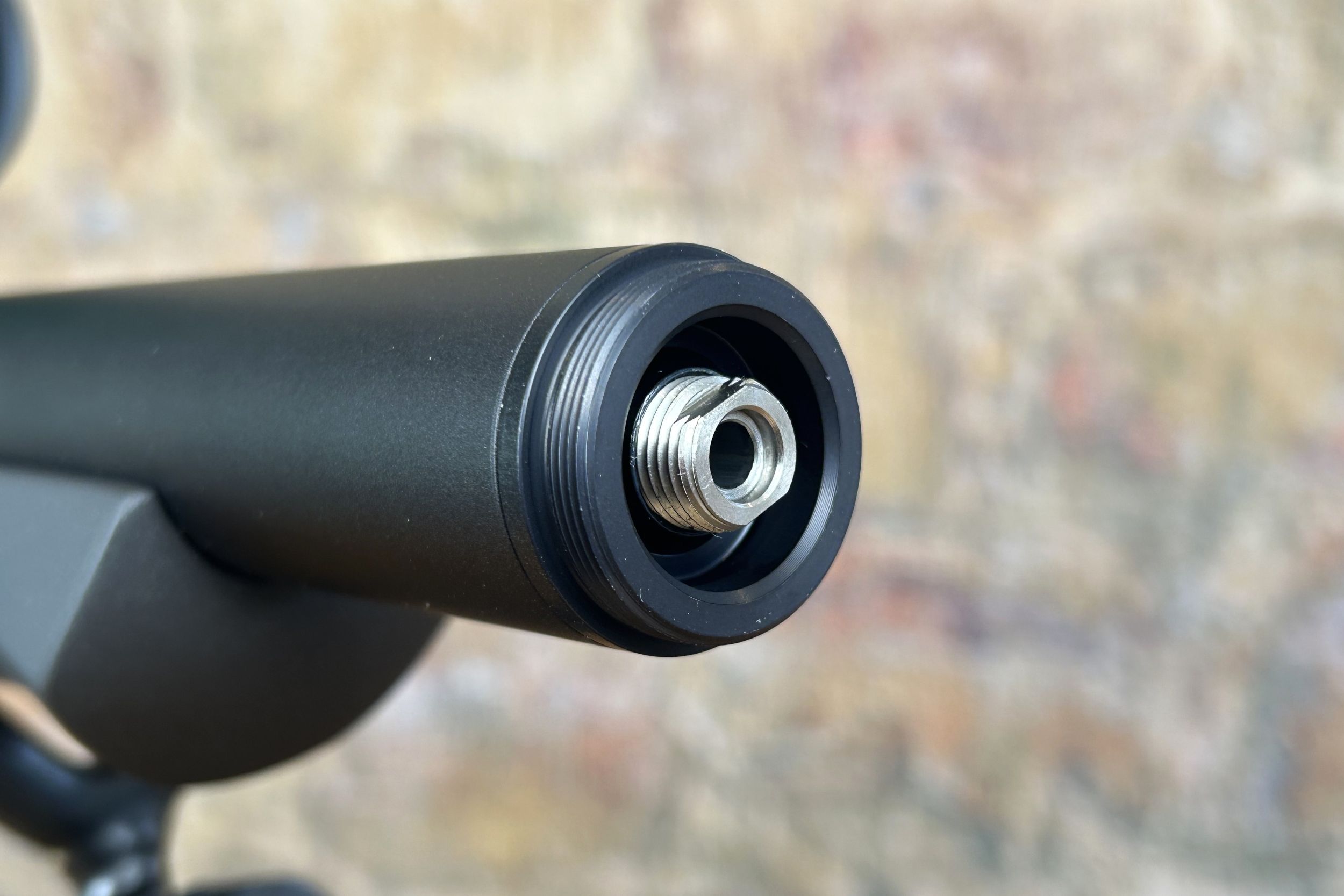
Most airgun shooters know about the DRS’s innovative air cylinder, which is actually wrapped around the barrel. This feature is now incorporated into several FX models and improves barrel rigidity while also resulting in a very sleek looking airgun. There are numerous barrel length options, including the 380mm barrel on the Compact, as well as 500mm and 600mm, plus 700mm at FAC power. The barrel housing incorporates a half-inch UNF thread for silencer attachment, and it is now possible to swap over barrel liners without having to degas the gun first – another welcome refinement on the MKII.
Below top: The FX DRS MK2 comes with a 30 MOA Picatinny rail as standard
Below bottom: Barrel liners can now be changed without having the empty the cylinder
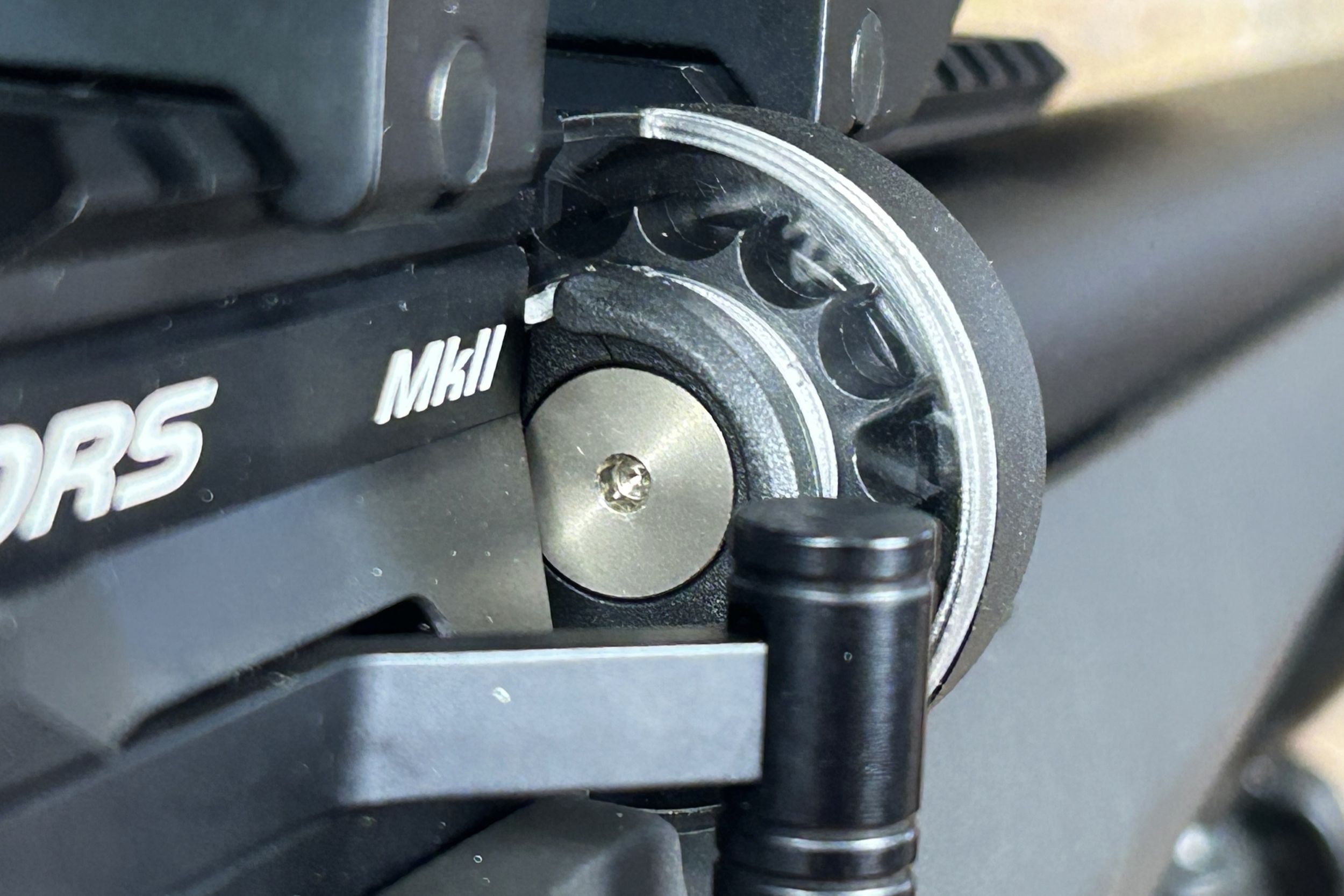
The DRS runs a magazine-fed action and the mag supplied with the review gun holds 14 shots in .22 calibre. It is easy to load and appeared to be very kind to pellets during my weeks of testing. This magazine has a nice low profile, but I believe the MKII will also accept the higher capacity mag. Sub-12 calibre options include .177, .20, .22 and .25m, while FAC models are now available up to .30 calibre.
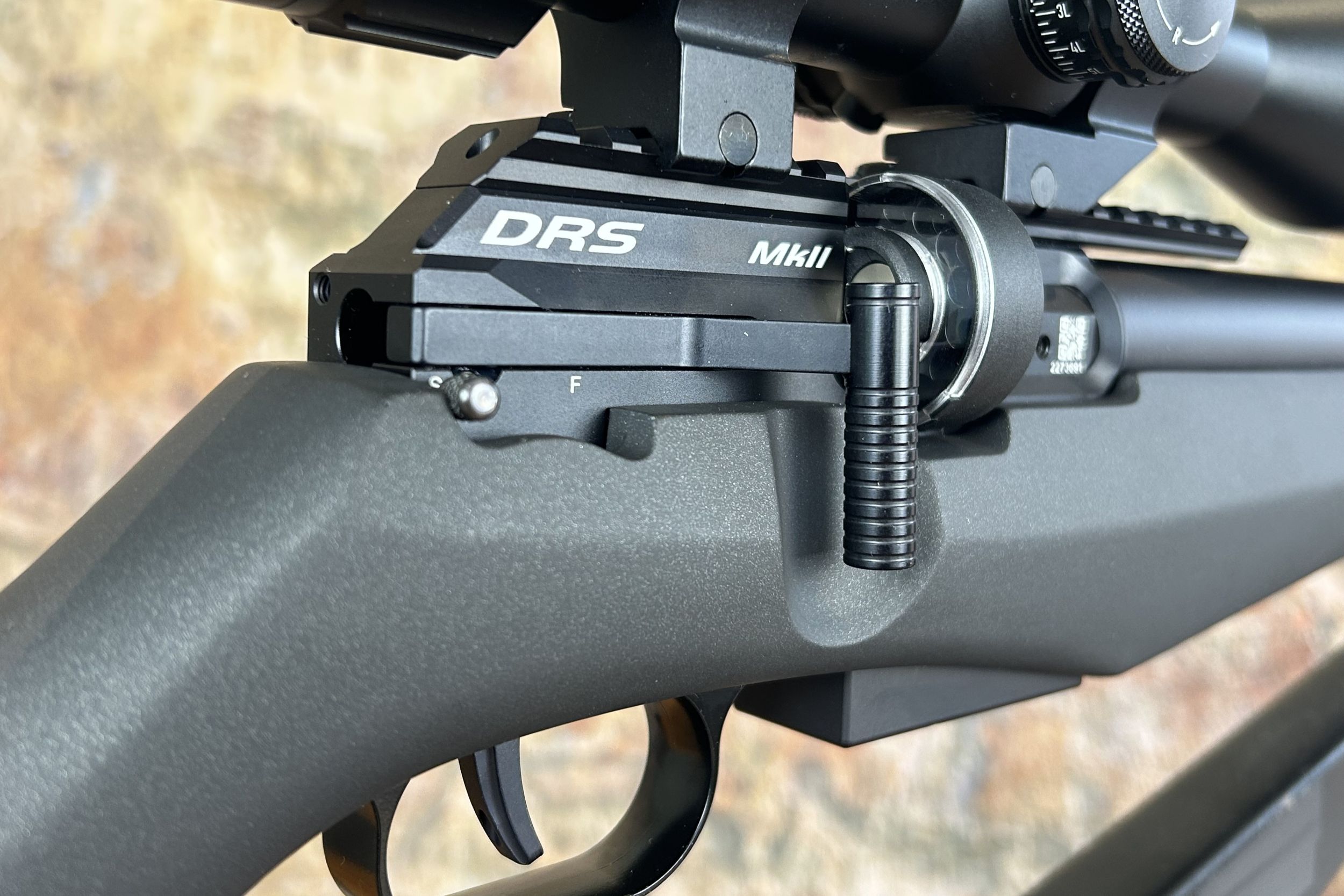
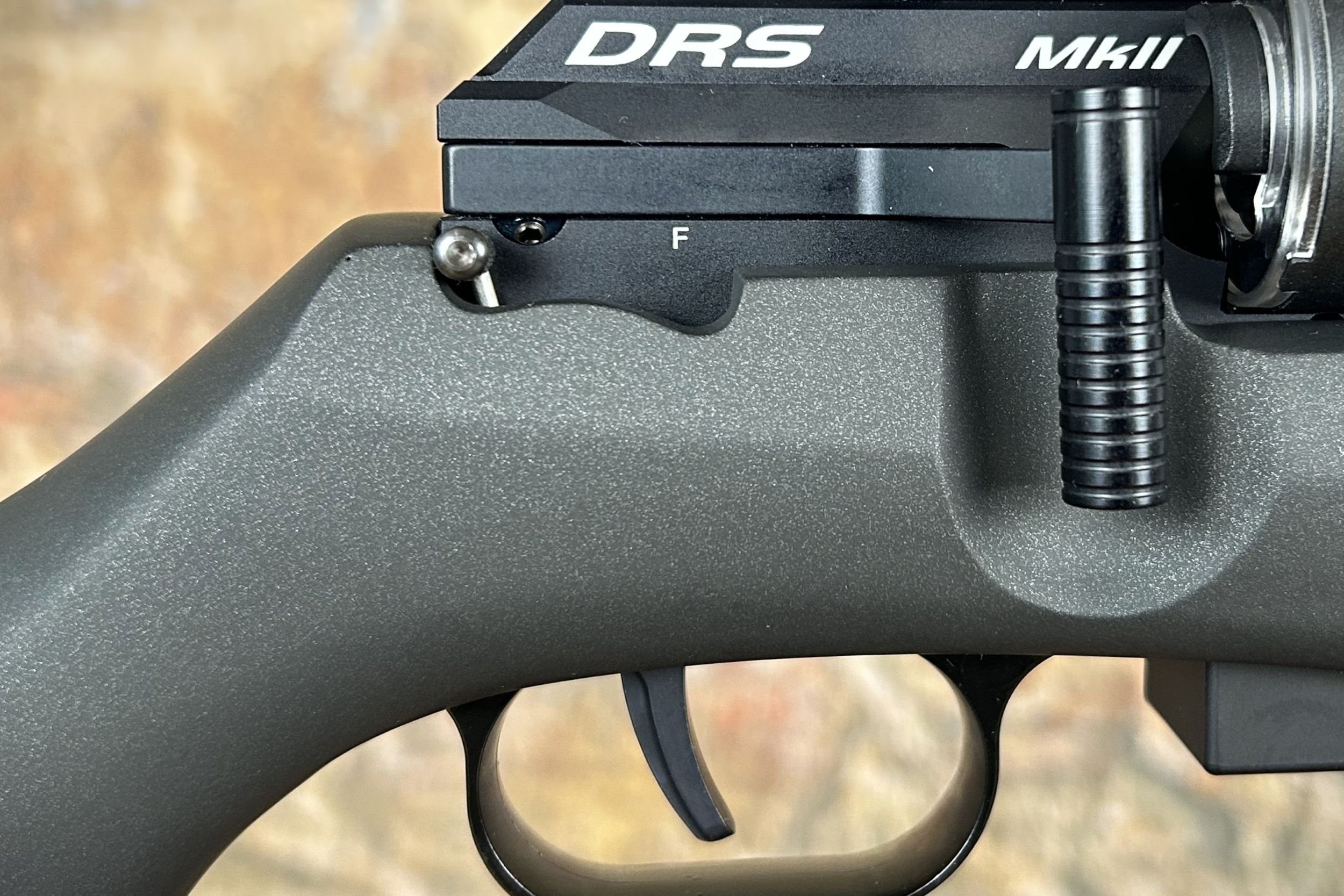
Cocking and loading are driven by a sidelever action which can not be reversed for lefthanders. The lever features a grooved biathlon type dropdown handle and is well positioned for intuitive operation – if you’re righthanded. I don’t know if the actual mechanism of the sidelever has been improved on the MKII, but it does feel smoother to me. The result is fast, slick reloading with the reassurance that fast follow-up shots are always at the ready.
Below top: The DRS MK2 runs a tried and tested multi-shot magazine
Below bottom: The sidelever action feels smoother than on the MK1 but still can't be reversed
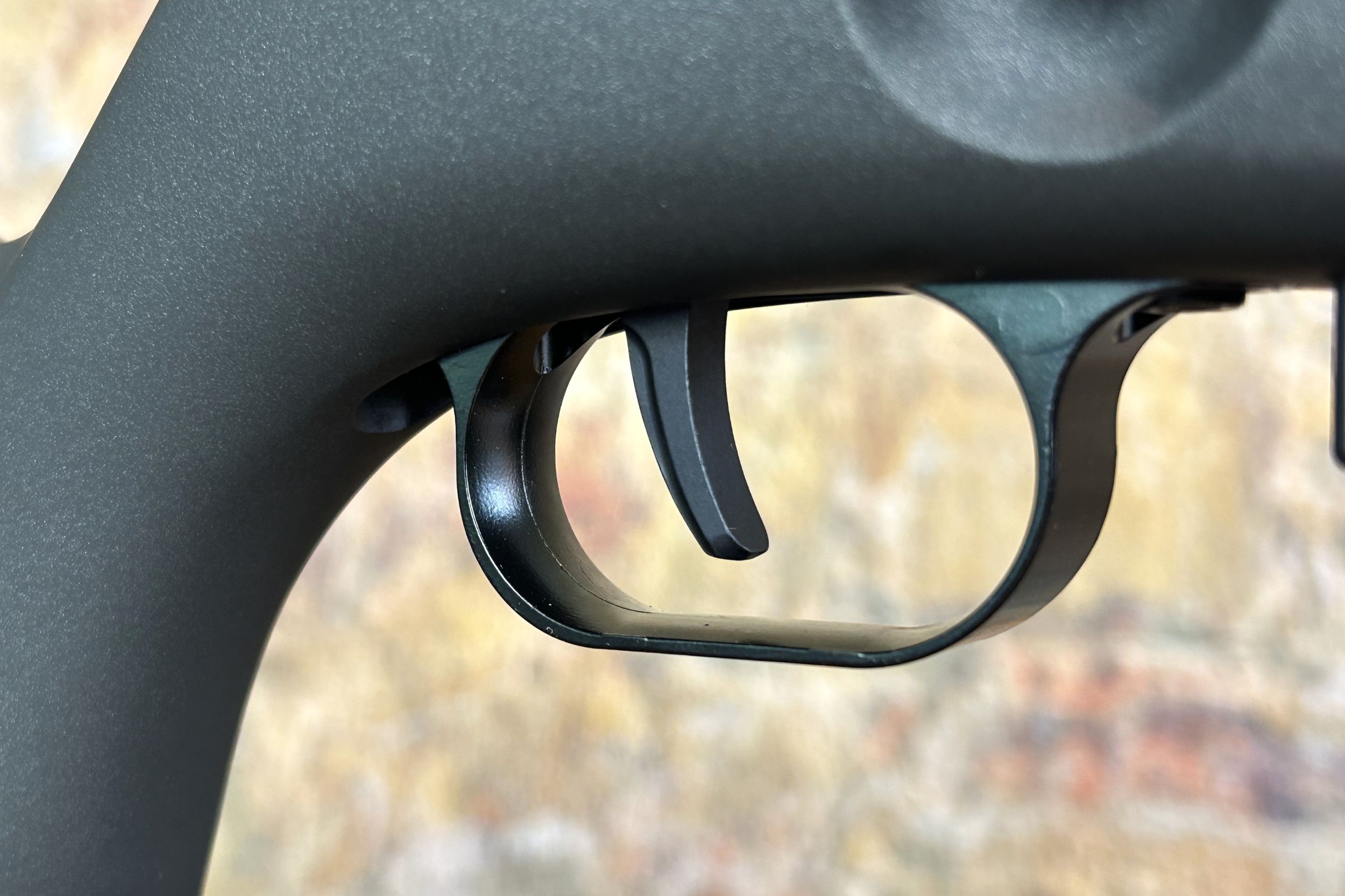
The trigger on the review gun was truly brilliant. I am not sure if that actual mechanism has been refined but the blade is a different style from the one on my MkI. I mistakenly said that the blade was no longer adjustable for height and angle in my review video. The pressures of filming to a tight deadline prevented me from diving as deep as I would have liked and, when I had time to get the gun out of its stock, it became very apparent that the new trigger blade is indeed adjustable – the difference being that the locking grub screw is located at the back rather than the side.
Although trigger release is adjustable, I tested it straight from the box and it was set up perfectly for me. The first stage felts very positive and concluded with an unmissable stop before a creep-free and totally predictable second stage break. This is the sort of trigger you soon learn to use subconsciously, which makes a big difference when it comes to landing shots with absolute precision.
You still get quite a basic safety catch on the DRS MKII – but it does what it needs to do. It is nicely positioned, very quiet in operation and feels more positive than the one on the MKI. You pull it back into the rearward position to make it safe, then nudge it forward into the fire position when you’re ready to take the shot.
Below top: The trigger blade is adjustable for height and angle, and the release mechanism is also adjustable
Below bottom: Although the safety catch is quite a basic design, it still works perfectly well and is very quiet
The DRS MKII is stated as having improved airflow efficiency, but I think the biggest gains will be for high-power FAC shooters. They will also get an improved power plenum, which should assist when really cranking up muzzle energy with heavy ammo. The sub-12 DRS is still a pretty slick shooter, though. It has an AMP MKII regulator and the test gun was running at 11.5 ft/lb muzzle energy with shot-to-shot variation remaining comfortably within seven feet per second over a ten-shot string.
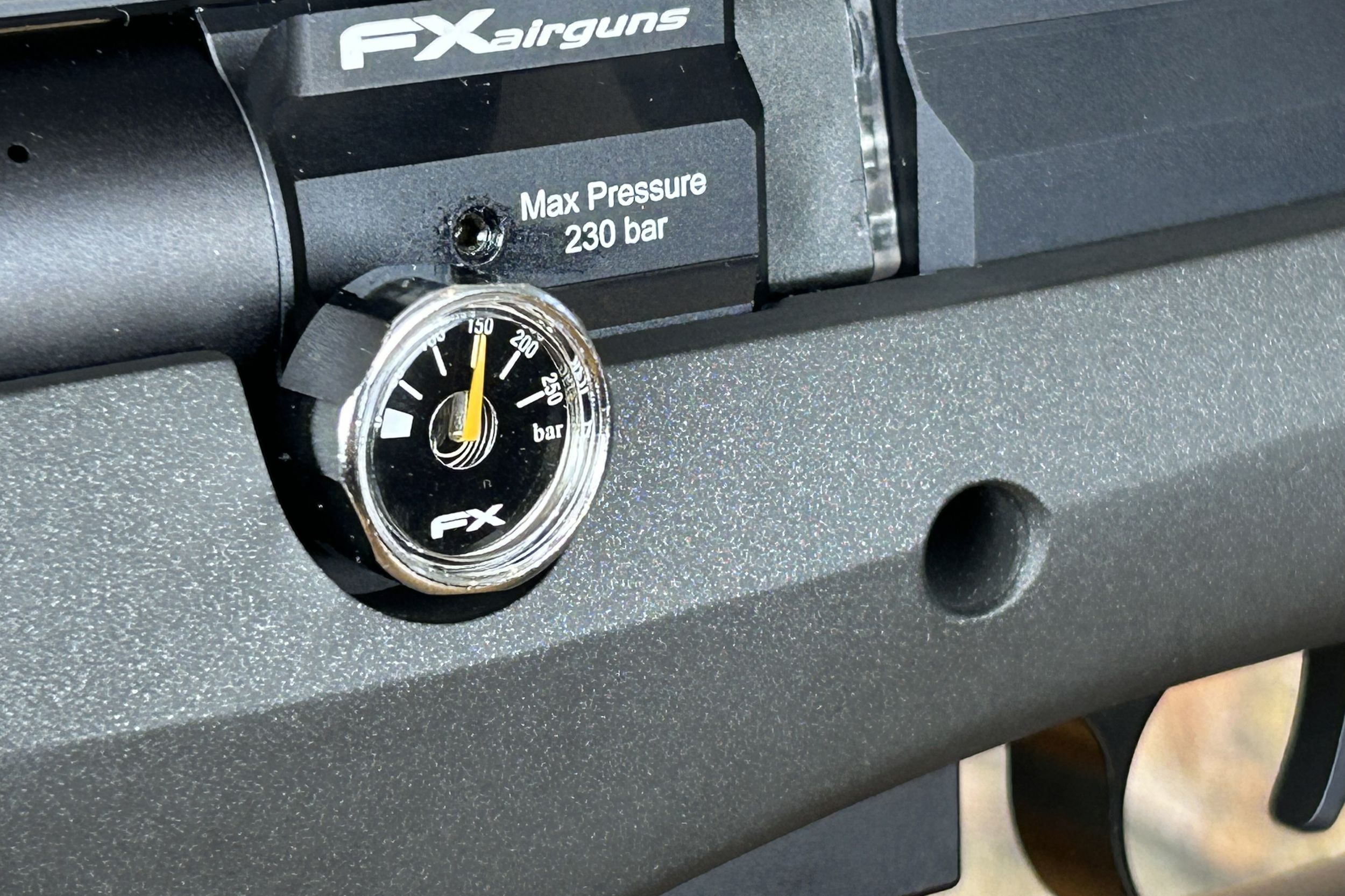
Maximum fill pressure is 230 bar, and pressure inside the wrap-around cylinder is displayed on a gauge that’s positioned just behind the barrel on the left side of the gun. I didn’t have quite enough air in my bottle to give the DRS MKII a full charge, but FX states that it should return around 140 shots from max pressure – pretty impressive considering that short barrel and compact cylinder. Refilling is a simple matter of plugging the supplied probe into the inlet which is just below the magazine slot. These is still no plug to cover the inlet. I know a lot of shooters would appreciate one, although I ended up using a piece of foam to keep it covered on my MKI.
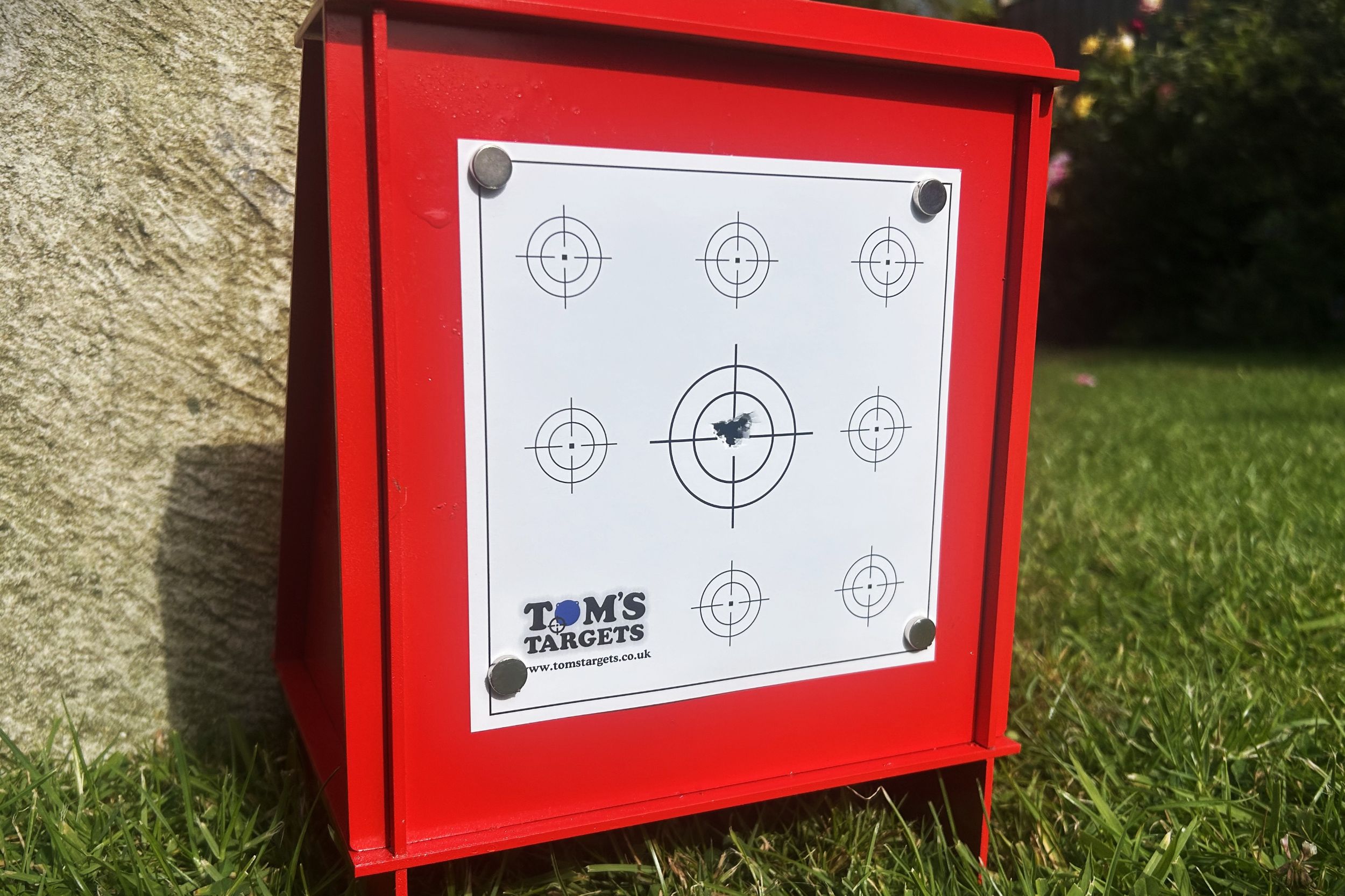
I have always been very happy with the accuracy of my original DRS, so I had high hopes for the new model. I wasn’t disappointed and I would go as far as to say that it’s better. The Superior STX barrel and consistent power output ensure that pellets travel downrange with really impressive accuracy. Off the bench, it was single-holing at 30m – as you would expect. It was still single-holing at 40m – although a bit more raggedly - and, in windless conditions, it is capable of printing thumbnail sized groups at 50m.
Below top: The inlet is position just behind the pressure gauge, and still doesn't come supplied with a plug
Below bottom: Mat was very impressed with the DRS MK2's performance on the range, with impressive grouping out to 50m at sub-12 power level
While I have seen a handful of sub-12 shooters complaining that the biggest developments on the DRS MKII are to be found on high-power FAC-rated models, the progress was still very apparent on the legal limit version I was sent to test. The refinements are generally quite subtle, but they do make a great airgun even better – and I’m actually glad that the changes aren’t more radical because I was very happy with the DRS in its original guise. One of the real standout features for me – particularly with the Classic Synthetic model – is the value for money it manages to deliver. With performance that far exceeds its sub-£800 price tag, it really is one of the most affordable high-quality airguns out there and will certainly take some beating for the money.
MAKER: FX Airguns, Sweden
MODEL: DRS MKII (Classic Compact Synthetic)
PRICE: £789.99 (for model featured)
LENGTH: 840mm (33in)
WEIGHT: 2.2kg (4.9lb) unscoped
BARREL LENGTH: 380mm (15in), 500mm, 600mm and 700mm also available
MAX FILL PRESSURE: 230 bar
FEATURED SCOPE: Element Optics Helix
Article first published June 22nd 2026