
PRICE: £1,600
MAKER: Taipan Airguns
UK DISTRIBUTOR: Range Right
Thanks to UK importer and distributor, Range Right, rifles from Czech manufacturer Taipan are increasingly accessible. And that’s a good thing because not only does the line up contain some innovative designs, they also boast superb build quality and engineering.
As a result, of course, Taipan rifles are priced at a premium. But invest in one and you can be satisfied you have one of the best performing, and best made, PCP airguns money can buy.
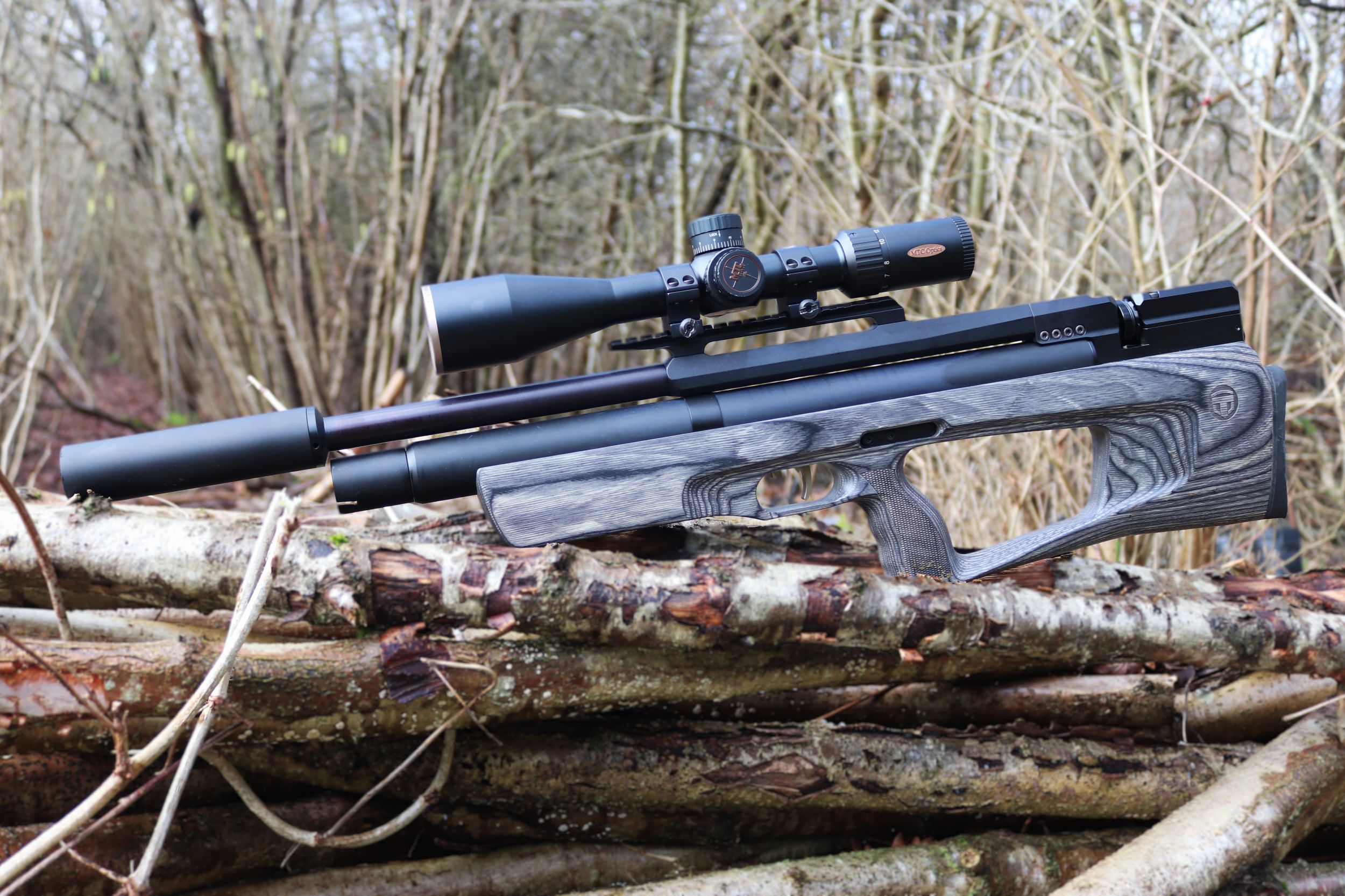
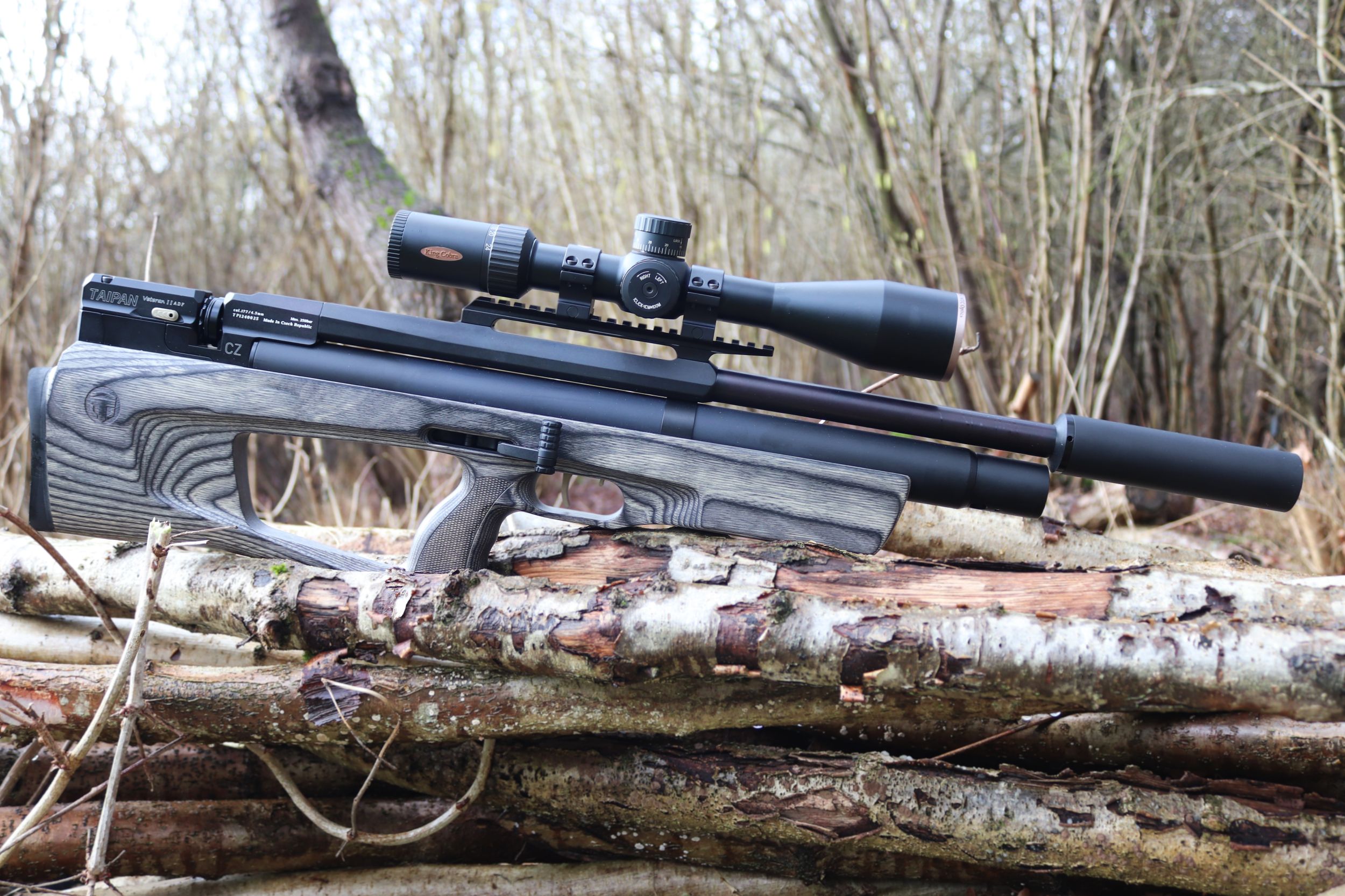
Taipan’s bullpup offering is the Veteran II, options for which include 500 and 700mm barrels and a Tactical version with a 480cc Kevlar air bottle.
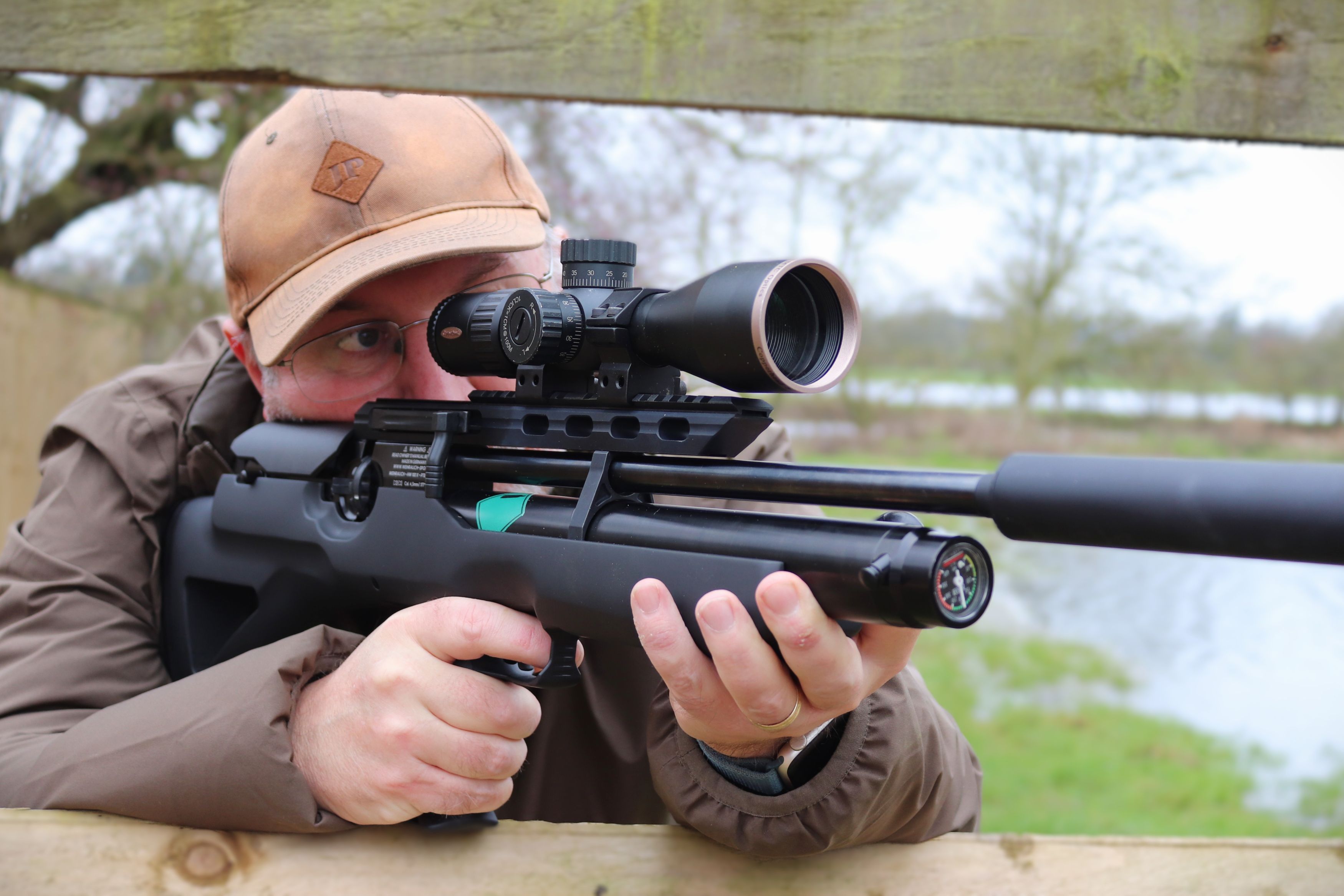
The 500mm barrel Taipan II featured here comes with a simple but stylish grey laminate stock. Measuring 830mm and tipping the scales unscoped at 3.8kg, this is a substantial bullpup and indicative of the quality of materials and attention to detail engineering.
There’s no adjustment in the rubber shoulder pad, nor is there a dedicated cheek support – omissions that would cause some to raise an eyebrow given the premium pricing. However, the truth is that the rifle really doesn’t need them. It shoulders perfectly, thanks to sublime balance, and if you’re concerned about resting your cheek on the metal action you need to man-up.
The pistol grip sits in front of a large thumbhole cutout that will accept even the biggest of hands. Subtle finger contours are augmented by stippling to make the grip both comfortable and secure for left and right-handers.
It sets you up well for the two-stage trigger that can be adjusted after removing the stock. The gold-coloured blade sits nicely in the trigger finger, and the two stages are clearly defined with a clean and predictable let-off. Forward of the trigger is a smaller safety catch blade which is pushed forward to make the rifle live.
A generous forend ensures plenty of room for your lead hand and the flat underside makes the Veteran II very stable when shooting freehand as well as from a bench. It’s less accommodating for hunters who use V-shaped rests like that on Primos Trigger Sticks, and fitting a bipod would mean having to drill into the forend.
At the back of the action, a plug prevents access to the hammer spring that can be adjusted on high power models. Slightly forward, a small sliding catch locks and releases the magazine. With the silky-smooth sidelever (which can be swapped to the other side of the rifle) pulled back, you need to draw the catch back to remove the magazine. Pushing the sidelever forward again collects the retaining catch on the way.
Along with a single shot loader, you get two magazines that follow the Weihrauch HW100 disc design. They take 10-shots in both .177 and .22 and are inserted into the breech from the top. An Anti Double Feed (ADF) feature prevents you ramming a second pellet up the barrel if you’re already cocked and loaded.
The free-floating CZ barrel comes with a silencer that is attached to the shroud via grub screws. Whilst this makes changing to your preferred silencer difficult, the upside is that it does a magnificent job of reducing muzzle report.
The Veteran II has a 311cc air cylinder. Filling it is achieved by rotating a super-smooth collar at the front and inserting the provided probe with pressure displayed on a manometer at the front of the cylinder. The rifle is rated to take a maximum fill of 250-bar and I found a 200-bar fill was sufficient to serve up 110 shots on our .177 test rifle which, thanks to the regulated action, were consistent across almost the entire range with a 10-shot variation of just nine FPS at an average velocity of 707 FPS or 11.55 ft/lbs.
For the range test I fitted an MTC King Cobra scope to the 200mm Picatinny rail that incorporates 20MOA of elevation. Using 10.4g JTS Dead Centre pellets, 10-shot groups of 12mm CTC at 30 metres were easy to achieve along with one-hole groups only slightly larger at 40 metres.
Below: The Taipan Veteran 2 bullpup airgun
PRICE: From £650
MAKER: Stoeger Airguns
UK DISTRIBUTOR: GMK
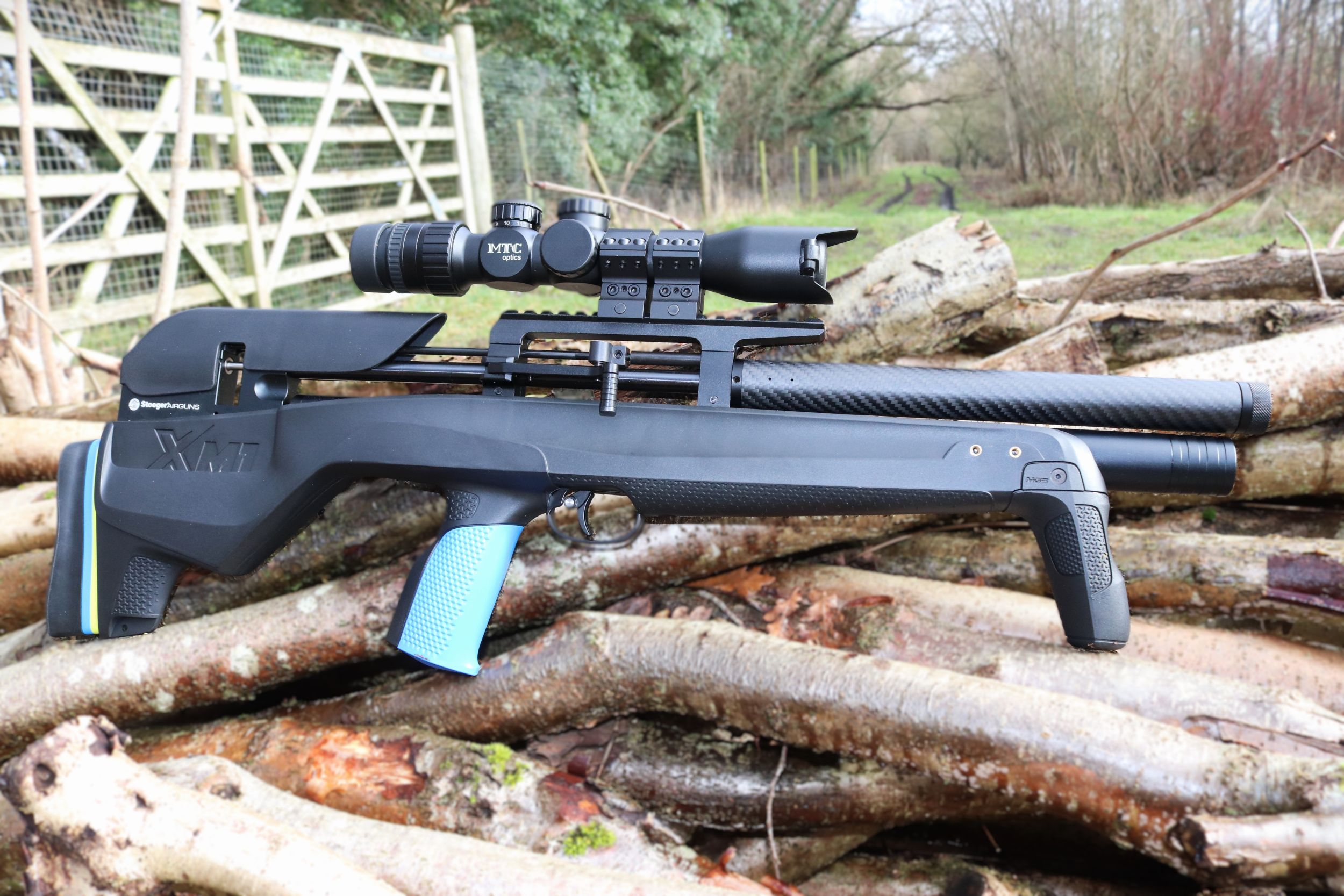
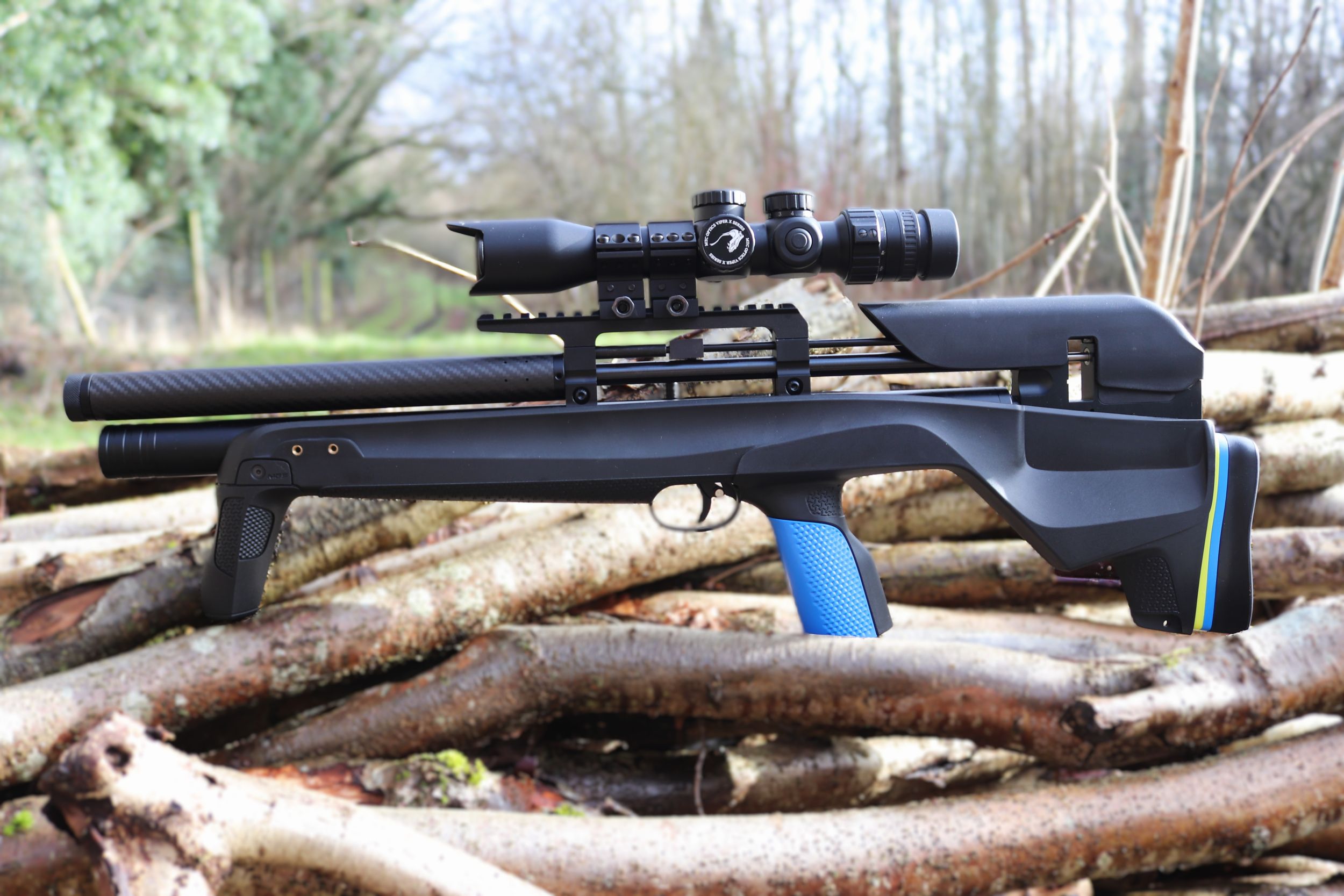
The Stoeger XM1 Bullpup comes with lots of components – interchangeable pistol grips and cheek pieces for example – but it would be unfair to term it a ‘Lego’ or ‘Meccano’ airgun because it most certainly is not a toy or gimmicky gun.
Adaptable or customisable is a better way to put it, because a lot of shooters will find the flexibility offered by this bullpup to be genuinely useful. At its core is a very capable and well thought out rifle. Extensive use of high-quality polymer and an overall length of just 700mm means it only weighs 2.8kg, so it’s light too.
The butt has a distinctively contoured design. With the blue and yellow spacers in place, the length of pull measures 340mm. It’s a neat feature but, if the colours are not to your taste, the spacers can be removed, shortening the length of pull by around 10mm.
Stoeger’s design department didn’t hold back when it came to the pistol grip too. The electric blue handle has plenty of stippling and, once again, can be swapped out for a black grip.
A moulded cheekpiece protects your face from the metal action. Although not adjustable, Stoeger provide two cheekpieces of differing height to ensure good eye to scope alignment.
There’s no external means of adjusting the trigger. The Stoeger blurb says it is single stage, although I could easily detect a clear stop and a definite, if short, second stage before the let off that was both consistent and predictable.
Set at the root of the curved blade is the safety button. I’m not a huge fan of safety catches near the trigger and it’s possibly a concern for Stoeger too as there’s a small shield on the right to help prevent pushing the button to the live position by accident.
You get two magazines that serve up 11-shots in .177 and nine in .22 with a dead-stop feature to prevent air being wasted on dry shots. Contradicting most of the rest of the rifle, they are mostly made from alloy. To fill it, rotate the plate almost 360 degrees anticlockwise against the spring and insert the first pellet skirt first through the back to lock the drum.
The magazine is inserted upright into the breech from the righthand side. The sidelever action is exposed with the biathlon-style handle halfway down the rifle on the right side. It operates smoothly with a sprung first stage.
I fitted an MTC Viper Pro scope on the polymer Picatinny rail before taking the .22 calibre XM1 Bullpup down the range. Using 18.13 grain JTS Dead Center pellets, the chronograph reported an average velocity of 528 FPS (11.23 ft/lbs) over a 10-shot string with a variation of just 14 FPS.
That would suggest the regulator is doing a good job, as would the overall shot count; I was able to extract more than 100 very useable shots from the 265cc air cylinder, which takes a 250 bar maximum fill by inserting the supplied probe into a port that is revealed by pulling forward a sprung collar at the front of the cylinder.
Bullpups can often feel awkward and top heavy in the shoulder. However, the XM1 Bullpup feels rifle-like thanks in part to a long forend that offers plenty of lead hand room. At the very end, a near vertical grip is surprisingly comfortable to use, although it can be removed and its fixture covered with a blanking plate.
A carbon shroud envelopes almost half of the 490mm barrel and does a very good job at reducing muzzle crack. Fitting a moderator to the half-inch UNF thread makes the XM1 Bullpup a very quiet airgun that didn’t disappoint when it came to accuracy, returning 18mm CTC full magazine groups at 30 metres.
Below: The Stoeger XM1 bullpup airgun
PRICE: From £1,395
MAKER: BRK
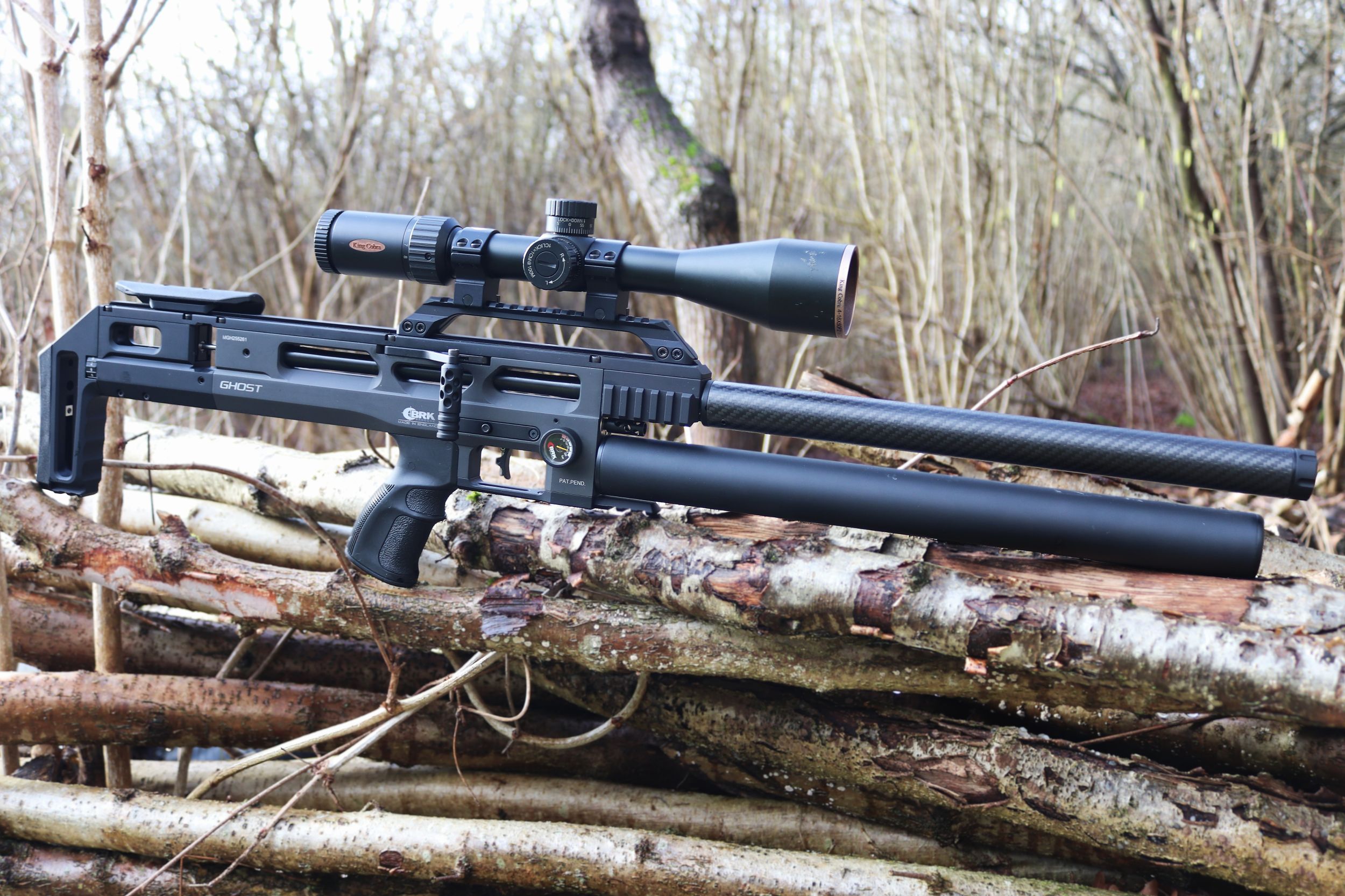
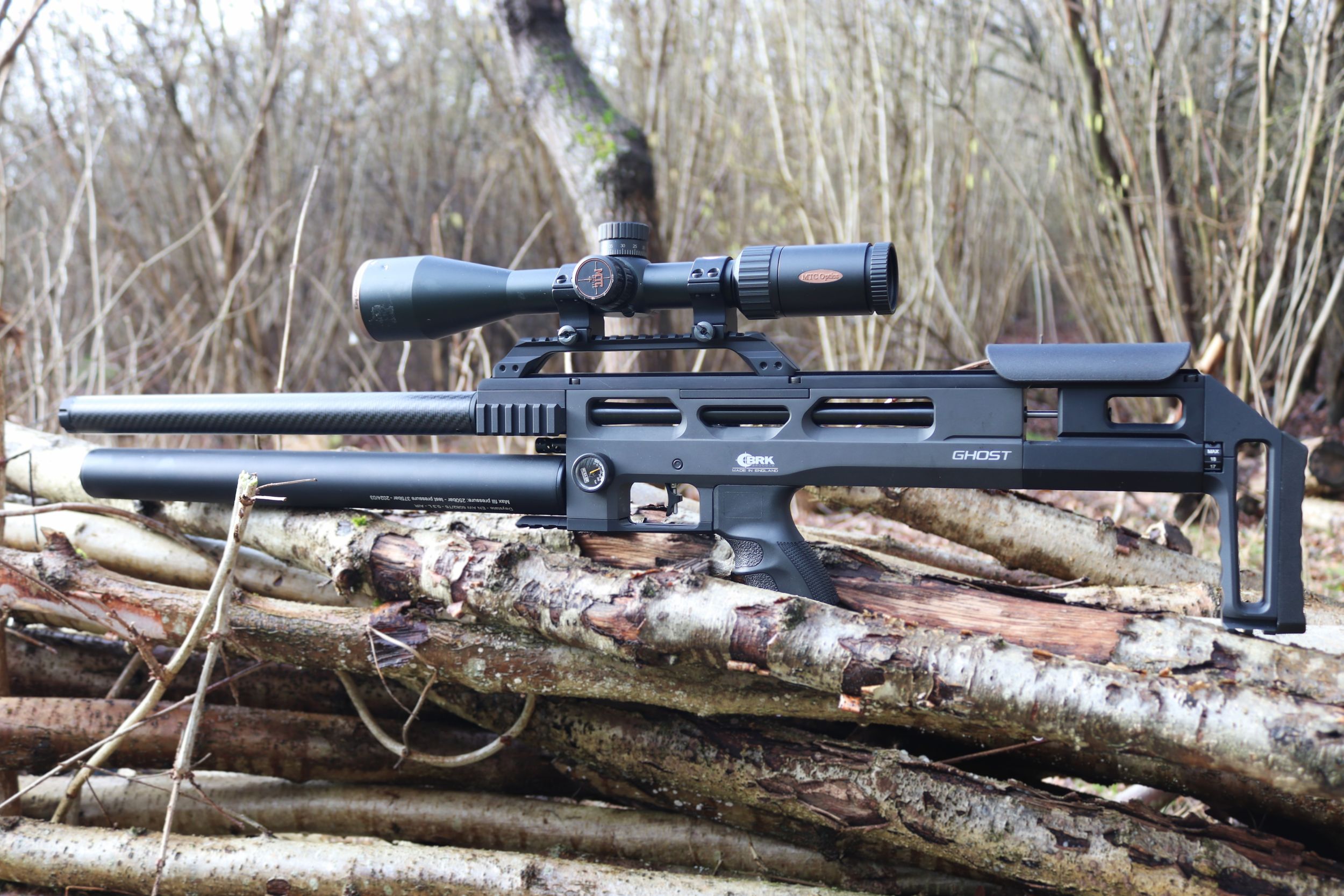
The Ghost has been a huge success for BRK (Brocock). Based on a version of the monocoque chassis developed for the Daystate Alpha and Delta Wolf airguns, this mechanical action bullpup has found favour with hunters and competition shooters alike.
Shooters have lauded its compact form, laser accuracy and reliability. The only thing holding some back from making a purchase was the price as the Ghost is a premium rifle.
The folks at BRK Brocock know this and, to their credit, have responded by launching the Ghost Zero which features a 300cc air cylinder instead of a 300 or 480cc carbon bottle. As a result, the recommended retail price is £200 less than the entry-level Ghost Carbine.
In just about every other respect, the Zero is the same. Except for the barrel that is. The 12 ft/lbs Carbine and Plus models have a 430mm barrel whereas the Ghost Zero comes with a 584mm barrel to ensure it extends beyond the air cylinder and keep your fingers safe. FAC models, which go up to 95 ft/lbs in .30 calibre, have the option of either 28-inch pellet or slug barrels.
Thanks to BRK’s modular design philosophy, the air cylinder is fitted with an internal valve so it can be removed simply by unscrewing it and replaced with a bottle. However, you’ll need to check the power output to ensure continued legality.
Fortunately, the Ghost Zero maintains the 20-point hammer spring adjustment feature to make this easy. BRK Brocock also points out that a DIY conversion from bottle to cylinder specification is not possible.
The Zero model is also a little lighter with an overall length of 876mm. As a long-term Ghost user – the Carbine is my go-to ratting rifle – I was relieved to discover that, despite the change in configuration, the Zero is every bit as well balanced.
There’s vertical adjustment in the rubber shoulder pad and the reversible cheekpiece will also slide forwards and backwards. And to ensure eye relief is just right, the raised Picatinny scope rail can move along a 450mm dovetail rail. There are more Picatinny rails to accommodate accessories on either side and underneath the rifle.
BRK’s match grade triggers are among the best. Two stages and fully adjustable, the post and shoe design falls comfortably to your trigger finger from a stippled pistol grip that can also be swapped out for an aftermarket design. Just above it, the push through safety catch is safe when pushed to the right.
The magazine takes 11-shots in .22 and 13 in .177. Filling it is achieved by lifting a hinged cover and rotating the inner drum clockwise against a spring. Dropping a pellet into the bottom hole holds the spring in place so you can fill the remainder of the chambers. With that done, the magazine inserts into the breech flat side first where it is held in place with a magnet.
The sidelever can be swapped to either side of the rifle and, whilst the long drop-down handle makes cocking the BRK Ghost Zero easy and quick, it impedes access to the safety catch. In truth, you soon learn how to live with it, and aftermarket alternatives are available.
Filling the Ghost Zero with air follows the same process as its bottle brother. Removing a magnetic cover on the underside of the trigger guard reveals a filler valve to which a quick release foster fitting will attach. Thanks to its Huma regulated action, the rifle will take a 250-bar fill which, BRK says, will deliver as many as 380 shots in .22.
As a long-time Ghost shooter, the range test held few surprises as our .177 rifle racked up single hole 9mm CTC groups at 30 metres with ease, and 14mm groups with a little more effort at 40 metres using 9.56g QYS Streamlined pellets. Consistency over the chronograph was an impressive six FPS variance over a 10-shot group at 11.47 ft/lbs or 735 FPS.
Below: The BRK Brocock Ghost Zero bullpup airgun
PRICE: £1,400
MAKER: Weihrauch Sport
UK DISTRIBUTOR: Weihrauch UK
The trouble with making one of the best bullpup PCPs – and that’s what the original HW100 BP is considered to be – is that when it’s time to bring out a new model, there’s a temptation to make it radically different.
Thankfully the Weihrauch team didn’t make that mistake with the HW100X BP. But there’s risk associated with that strategy as well, because some may be lulled into thinking nothing of any significance has changed.
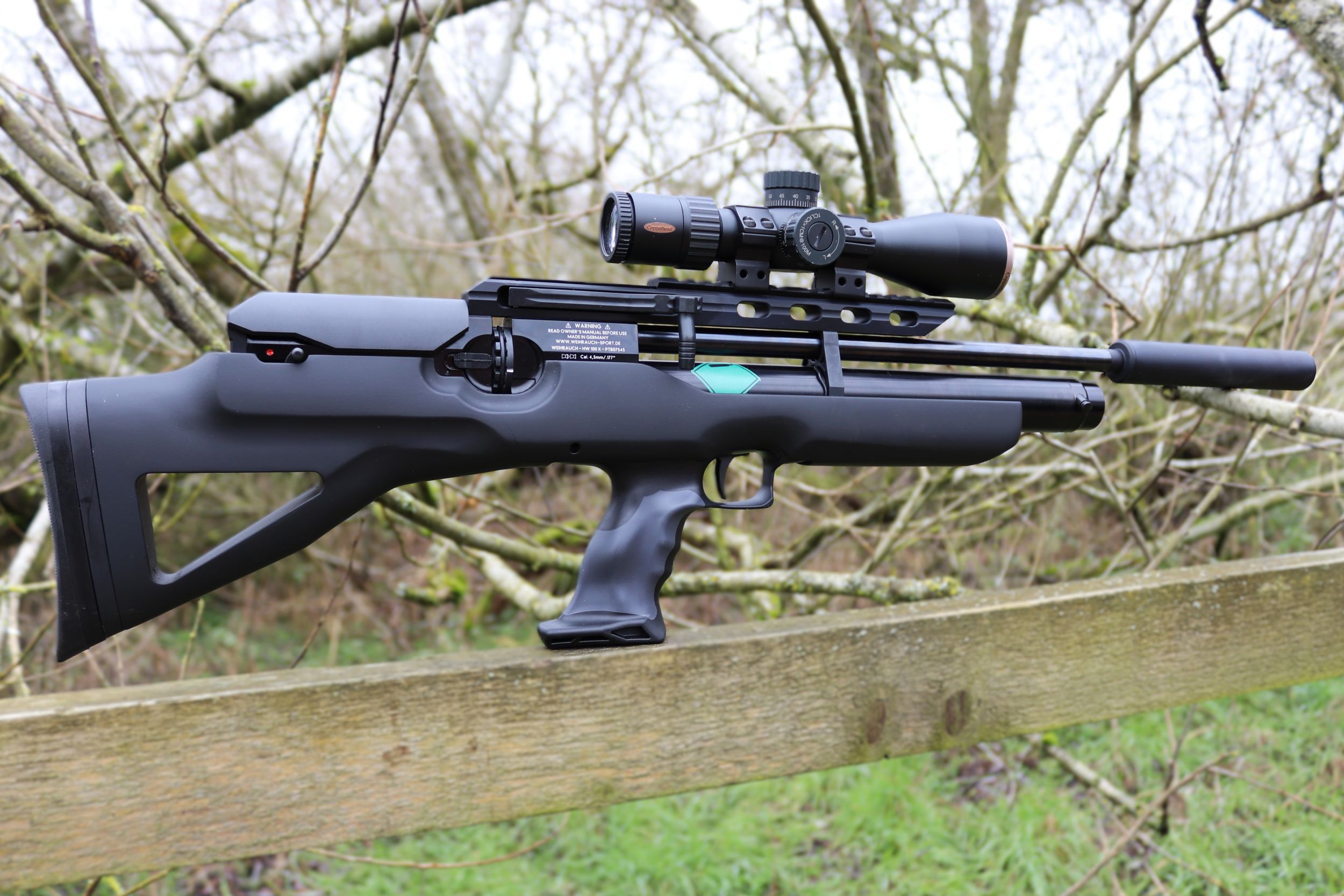
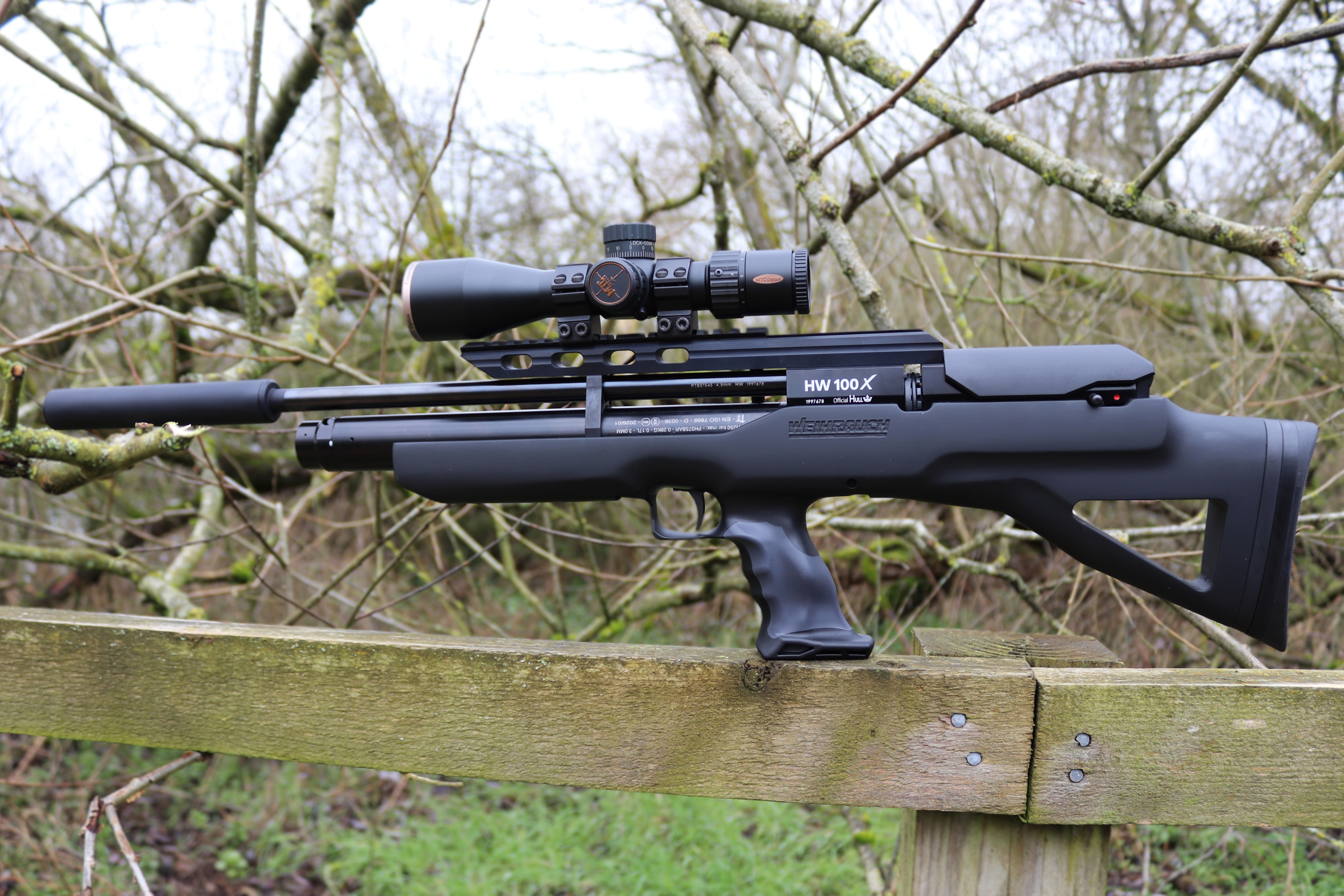
And that would be a mistake. It’s true, outwardly the HW100X looks very similar to its predecessor. There are some subtle refinements to the black soft touch stock – the fore end is slightly more rounded and there’s a triangular cutout in the butt. But that’s about it. The height adjustable shoulder pad is still there, so too is the cheek rest.
I’m not suggesting for a minute that Weihrauch’s design team took the day off. Instead, I suspect their view was more pragmatic; the original stock was very good, so why muck about with it.
A similar approach has been followed for other components. The excellent 14-shot disc magazine (you get two) is unchanged, so too is the retaining system, dual-aspect safety catch and, I suspect, the superb two-stage adjustable trigger. Even the ergonomically perfect ambidextrous pistol grip looks the same. In fact, at 3.3kgs the HW100X BP weighs the same as the model it replaces, and at 830mm and 420mm, the overall length and barrel length are similar too.
So, side by side, it’s difficult to tell the old and new rifles apart. But there’s a good reason for that: the changes made by Weihrauch are on the inside where it matters most.
Shot count was always the HW100’s weak point and even the ‘S’ and ‘T’ models with their larger air cylinder struggled to return more than 100 shots. The new HW100X model features a new, in-house design regulator. To be fair, consistency was never an issue, but the new design has dramatically improved shot count. You could just about wring out 60 shots from the old BP whereas Weihrauch claims more than 200 from the new rifle’s aluminium 170cc air cylinder.
Out of the box, the HW100X BP comes with the cylinder completely empty and unattached. Clear instructions tell you to fill the cylinder to 250-bar, which is achieved by inserting the probe into a port at the front, before screwing it into the rifle. Once the cylinder is in place, the rifle can be filled as normal.
With that done, I fitted MTC’s suitably compact Copperhead scope to the generous 90mm Picatinny scope rail and took the HW100X BP down the range.
Rather than screw in the forend Picatinny accessory rail, which comes with the gun, to attach a bipod, I rested the HW100X BP on a bag. As with most bullpups, the HW100X BP performed the magic of fitting me like a full-size rifle as soon as I put it to my shoulder. The scope rail elevates the optic on the action but not excessively so, and the cheek rest made for an extremely comfortable hold with excellent eye to scope alignment.
With the retaining catch pulled back, the magazine slots into the breech from the right side. Unlike some other systems, you’ll need to push the catch forward again to engage the magazine to ensure it cycles every time you crank the slick sidelever.
Using 10.4 grain .177 calibre JTS Dead Center pellets, I had the rifle zeroed after only a few shots, marvelling not for the first time how the Weihrauch silencer, which comes with the rifle, does such a good job of making the HW100X BP almost silent.
I needed only one magazine to confirm this bullpup’s superb accuracy. Full-magazine groups measuring 15mm centre to centre at 30 metres were a formality and weren’t much bigger at 40 metres.
The shooting experience was everything I love about Weihrauch airguns and the chronograph reported an average of 703 FPS or 11.42 ft/lbs over 10-shots strings with a variance of just seven FPS.
Below: The Weihrauch HW100 X BP bullpup airgun
PRICE: £525
MAKER: Kral Arms
UK DISTRIBUTOR: Range Right
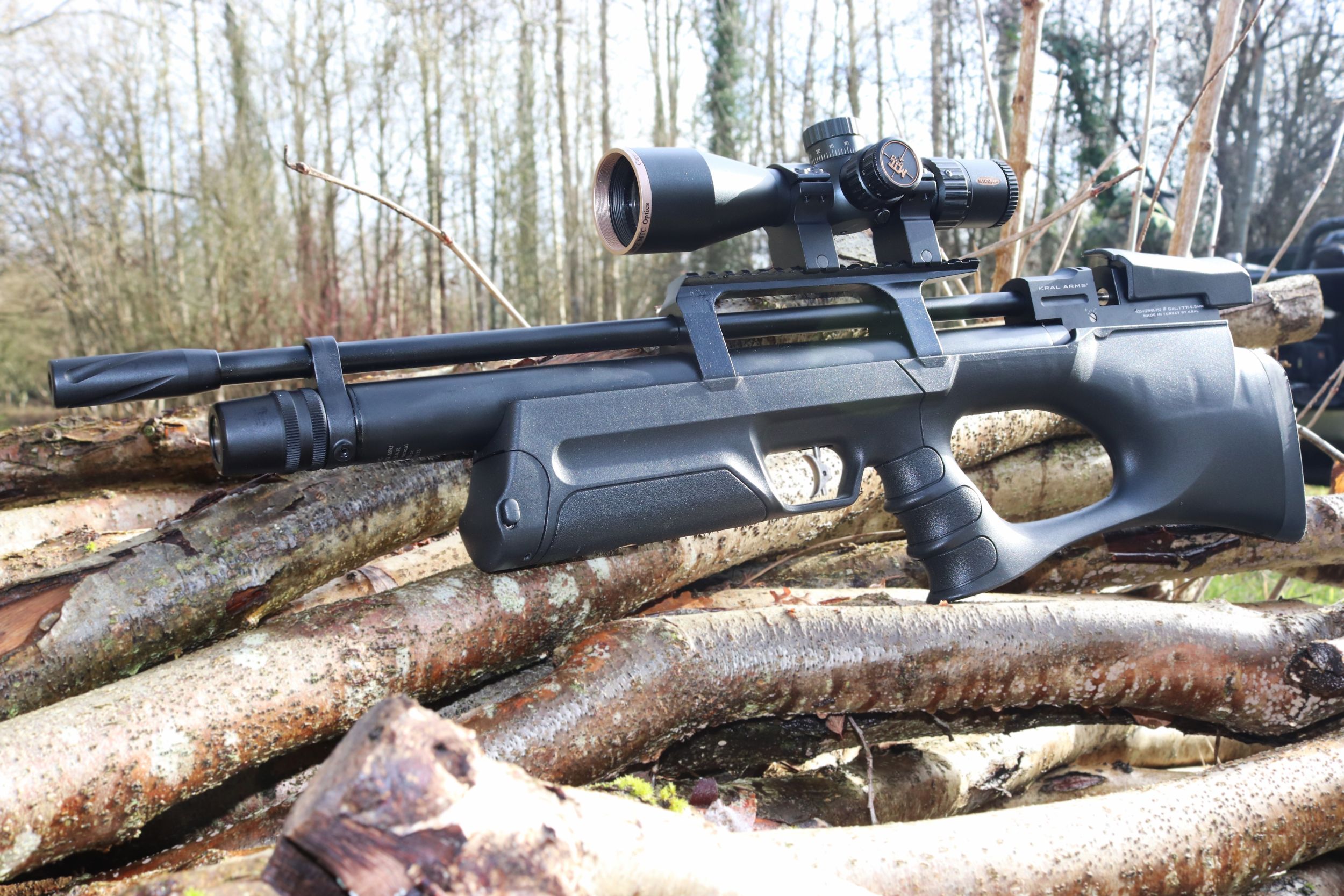
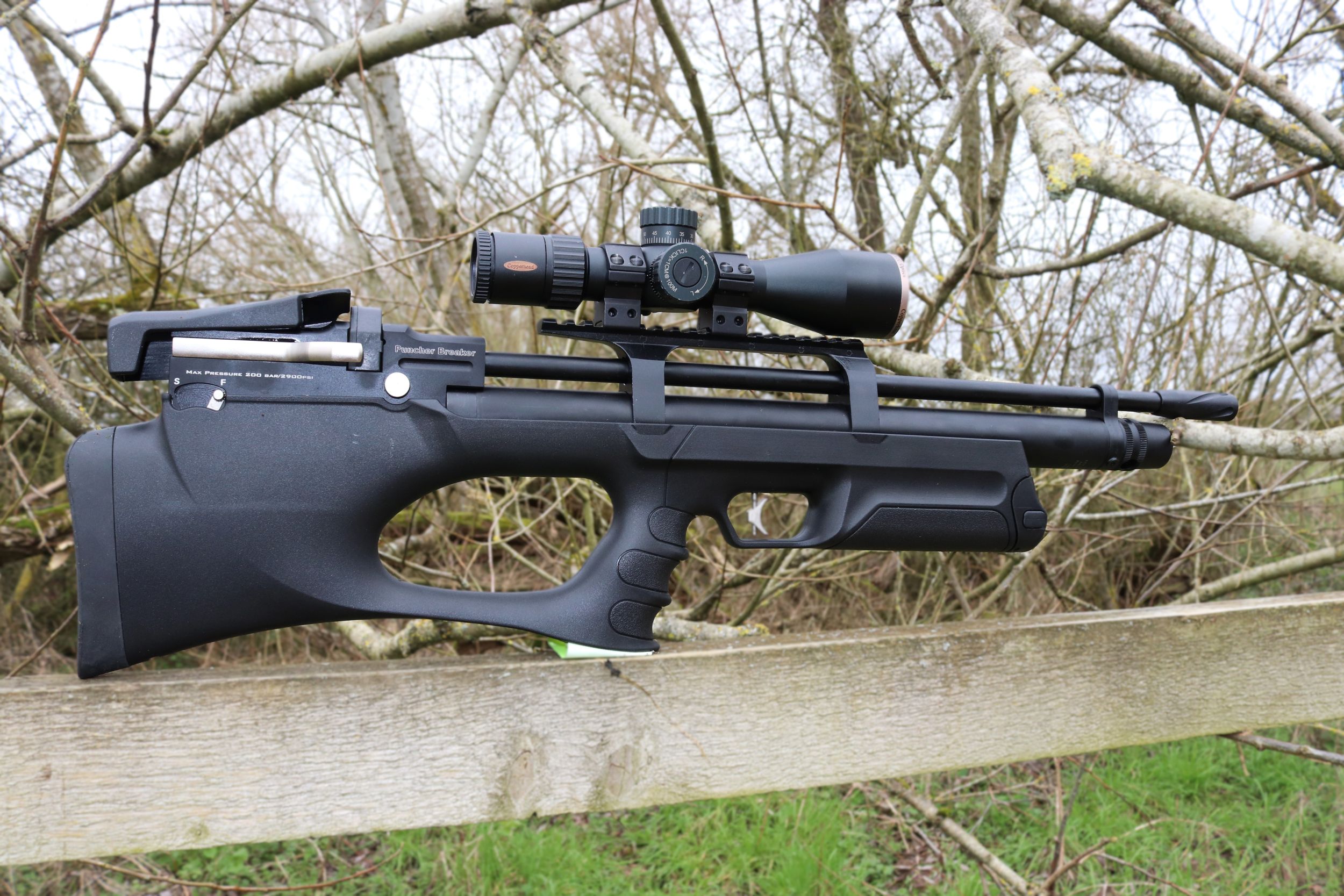
The Kral Puncher Breaker bullpup has been around a few years, but it remains one of the best affordable PCP bullpups on the market combining a proven action, plenty of shots and performance that belies its asking price.
At 720mm and a little over 3.5 kgs in black synthetic stock guise – there’s a walnut option as well – the build quality is solid, and the rifle has a bomb proof feel to it with no burrs or sharp edges to the stock.
It’s thoughtfully designed too, with stippled finger contours on the pistol grip, and a magazine storage cavity at the front of the forend. There’s plenty of room for your lead hand and a brass-coloured hole will accept a Picatinny accessory rail that is provided.
There’s no adjustment on the rubber shoulder pad but a cheekpiece, that can be adjusted forward and back by slackening a screw, ensures a comfortable position.
The Picatinny scope rail is made from polymer, the thought of which may put some people off. All I can say is that I have used a Puncher Breaker bullpup for years and it’s been perfectly accurate all that time.
The raised rail does mean your scope, as with many bullpup designs, sits high above the barrel and I had to use a set of extra high Sportsmatch mounts to achieve proper eye alignment. You can get away with lower mounts but may need to remove the plastic cheek rest.
As well as a single shot tray, you get two plastic magazines that are filled by first rotating a face plate clockwise almost 360 degrees. Dropping a pellet nose-first into the first chamber holds the inner drum as you fill the rest of the magazine, returning the plate anticlockwise as you go.
The magazine takes 14 shots in .177 and 12 in .22 calibre and is inserted into the breech from the right with the rounded end going in first and the shot counter facing you. A raised ridge on the front of the magazine slots into a groove in the breech.
The silver sidelever is set at the back of the rifle in true bullpup ‘finger in your ear’ cocking style. The first stage is sprung and the second is smooth and precise, as is the return. The whole process has enough resistance and mechanical feel to leave you in no doubt you’ve cocked the Puncher Breaker properly.
Below the cocking lever, the safety catch works with just the right amount of resistance, and the rifle is safe when it is pulled back. Forward of that, a small silver dial adjusts power by choking the transfer port. There’s no indication of which way to rotate it but fully rotated clockwise will give you maximum power.
Using QYS Streamlined 9.56g pellets the chronograph showed an average of 731 feet/second (FPS) or 11.35 ft/lbs. On low power that dropped to 626 FPS (8.32 ft/lbs.). Bearing in mind the Puncher Breaker Bullpup is not regulated, consistency was admirable with a variance of 19 FPS over a 10-shot string at 150 bar.
The 280cc air cylinder will deliver enough shots for even the busiest of rat shooting sessions. Our .177 calibre test rifle served up more than 100 shots from the 200-bar fill down to 100-bar. A sweet spot between 190 and 130-bar produced nearly 60 acceptably accurate shots. Air is topped up by rotating a collar on the end of the cylinder and inserting the provided probe.
The range test returned 21mm centre-to-centre (CTC) groups at 30 metres and 33mm CTC at 40 metres. In the early days, triggers were something of an Achilles Heel for Kral but, thanks to input from Range Right, they have improved. The two-stage post and shoe unit on the Puncher Breaker Bullpup is precise and provides plenty of feedback. It was fine for me out of the box, but adjustment is possible with the stock removed.
Shooting the Kral Puncher Breaker Bullpup on the range did remind me what a loud little gun it is. If you intend taking one hunting, or using it in the garden, you’ll want to invest in a silencer which can be attached by removing the muzzle protector to reveal a half-inch UNF thread on the 530mm (21 inch) barrel.
Below: The Kral Puncher Breaker bullpup airgun
Article first published February 23rd 2026


